More About This Card
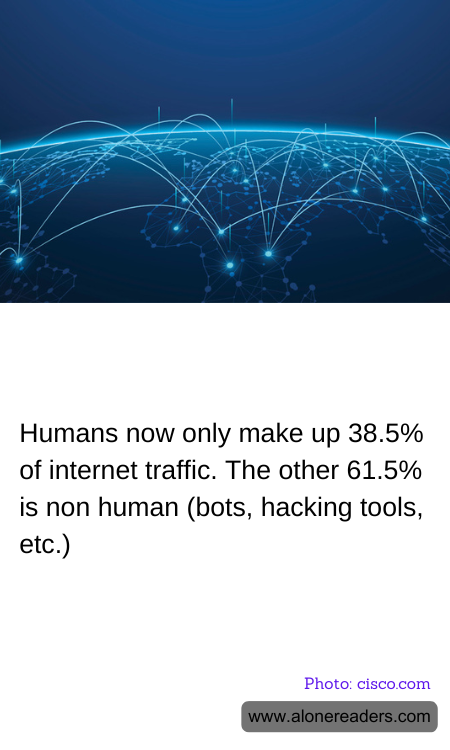
In the vast digital ecosystem of the internet, the presence of non-human traffic has overtaken human interactions significantly. As of recent data, humans account for only 38.5% of internet traffic, with the remaining 61.5% dominated by bots, hacking tools, and various automated systems. This shift illustrates the expanding role of automation and artificial intelligence in online environments, influencing everything from content dissemination to cybersecurity.
Bots, which represent a large portion of this non-human traffic, serve a variety of functions. Some are benign, like search engine bots that crawl web pages to index information for Google or Bing, enhancing the efficiency and comprehensiveness of search results. Others facilitate customer service or manage routine inquiries on websites, providing quick responses to users at any hour. However, not all bots are harmless; some are designed with malicious intent. These nefarious bots engage in activities such as data scraping, launching denial-of-service attacks, or spreading spam and misinformation. They pose significant challenges to web security, often exploiting vulnerabilities in systems to steal data or disrupt services.
Moreover, automated hacking tools have become increasingly sophisticated, enabling cybercriminals to execute large-scale attacks with minimal effort. These tools can test thousands of password combinations, exploit software vulnerabilities, or hijack IoT (Internet of Things) devices, contributing significantly to the landscape of cyber threats. The proliferation of such tools highlights an urgent need for robust cybersecurity measures and innovations to protect user data and maintain trust in digital transactions and interactions.
The prevalence of non-human traffic also raises important questions about the accuracy and reliability of data analytics. For businesses and marketers, distinguishing human users from bots is crucial for creating effective strategies and understanding customer behavior accurately. Misinterpretations caused by bot traffic can lead to misguided decisions and inefficiencies in resource allocation.
Understanding the composition of internet traffic is critical for both users and businesses in the digital age. It necessitates a continuous evolution of security protocols and an increased focus on developing sophisticated mechanisms to detect and counteract malicious bots. Moreover, with the ongoing advancements in AI and machine learning, the distinction between human and non-human interactions on the web is likely to become more blurred, making it imperative to adapt to these changes proactively. In this complex panorama, transparency, vigilance, and innovation in cybersecurity are more vital than ever to ensure a safe, reliable, and human-centric internet.