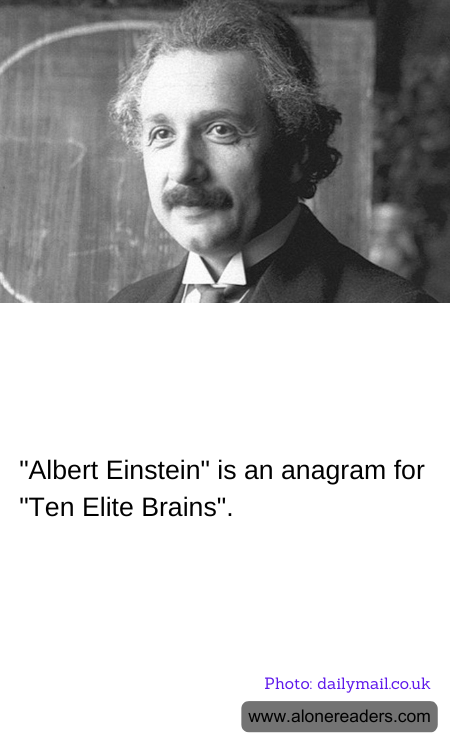
More About This Card
Albert Einstein, synonymous with genius, has a name surprisingly anagrammatic to "Ten Elite Brains." This coincidental word play aligns poetically with Einstein's monumental contributions to science, particularly in physics. Einstein, who developed the theory of relativity, fundamentally changed our understanding of space, time, and gravity. His famous equation, E=mc², articulated the relationship between mass and energy, influencing countless scientific and technological advancements.
Einstein was not just a theoretical physicist; he was also a philosopher of science whose insights reached beyond the chalkboards and into the realms of human ethics and understanding. His advocacy for peace and civil rights positioned him as a public intellectual of considerable influence during tumultuous times. Additionally, his formulation of the photoelectric effect laid the groundwork for quantum theory, demonstrating the particle-like nature of light and earning him the Nobel Prize in Physics in 1921.
The anagram "Ten Elite Brains," while playful, might not singularly encapsulate the breadth of Einstein's intellect and influence. However, it highlights the multifaceted genius of a man whose work traversed various disciplines, affecting theories in cosmology, quantum mechanics, and even atomic energy. Despite his passing in 1955, Einstein's legacy persists robustly in both the halls of academia and the cultural zeitgeist, proving that his brain was indeed among the elite of human history.