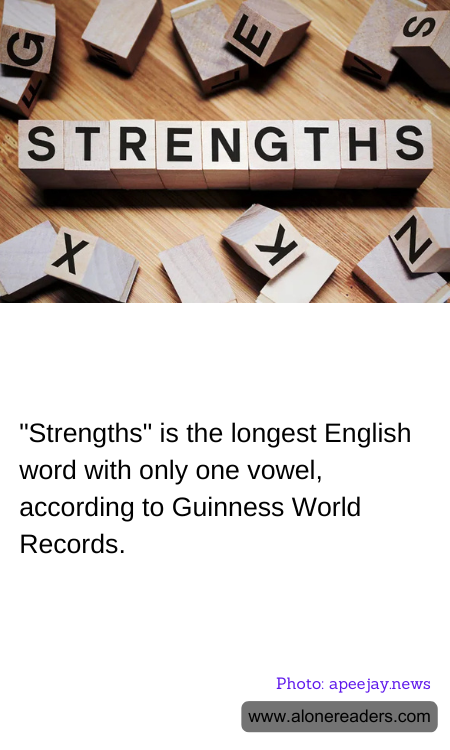
The English language is full of surprises and curiosities, one of which relates to the distribution of vowels and consonants in words. A fascinating example is the word "strengths," which holds the title for being the longest English word made up predominantly of consonants, containing only one vowel. This peculiarity makes it a notable entry in linguistic records and a frequent subject of trivia.
The word “strengths,” which is nine letters long, is primarily composed of consonants, giving it a distinct place in the English lexicon. The singular vowel is 'e', surrounded by a sequence of consonants. This configuration is not only rare but also challenges common patterns in English spelling, where typically vowels and consonants alternate more frequently. "Strengths" originates from the word “strength,” which itself is derived from “strong,” and the addition of "ths" at the end turns the adjective into a noun indicating durability or robustness in multiple areas or capacities.
This linguistic quality of having only one vowel makes "strengths" particularly interesting in terms of pronunciation and usage. The clustering of consonants can make pronunciation tricky for non-native speakers, highlighting the complexities of English phonetics and phonology. The significance of the word extends beyond its linguistic characteristics; it is often used in a variety of contexts to discuss physical, emotional, and intellectual capacities, making it not only a linguistic curiosity but also a word rich in meaning and application.
The recognition by Guinness World Records of "strengths" as the longest English word with only one vowel underscores the delight and intrigue that language can inspire. Such records encourage exploration of the nuances of language and engage people in understanding more about the words they use. This curiosity about language not only enhances vocabulary but also fosters a greater appreciation of the mechanics of language and its cultural relevance. In summary, “strengths” stands out not only for its distinctive structure but also as a testament to the complex and varied nature of English.
