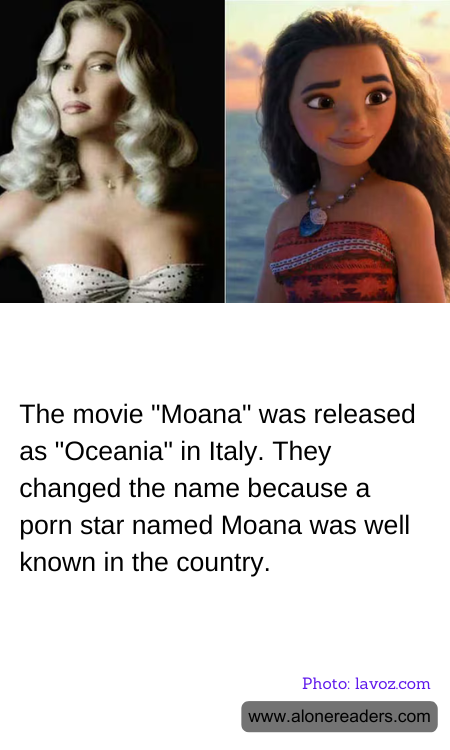
When the animated film "Moana" was released by Disney in 2016, it captured the hearts of audiences around the globe with its vibrant depiction of Polynesian culture and the tale of a fearless young girl on a quest to save her people. However, when it came to releasing the movie in Italy, the filmmakers faced a unique challenge that led to a significant change: the movie was renamed "Oceania." This decision was primarily driven by the fact that "Moana" was already a well-known name in Italy, albeit for entirely different reasons.
Moana Pozzi, an iconic figure in Italy, was a famous adult film star during the 1980s and early 1990s. Her widespread recognition and the associations with her name posed a potential conflict for Disney’s family-friendly image. The company aimed to avoid any inadvertent connections or confusion between their adventurous Polynesian heroine and the adult film star, which could distract from the film’s narrative and its cultural significance.
Thus, the title "Oceania" was chosen for the Italian market, a name that reflects the expansive and diverse region of the Pacific Islands that the movie celebrates. Marketers anticipated that this strategic renaming would cater better to the local audience by maintaining the film's focus on its rich storytelling and vibrant animation without extraneous connotations.
This adaptation underscores the importance for global brands like Disney to be culturally sensitive and aware of local contexts. By altering the film’s name, Disney ensured that the themes of bravery, exploration, and cultural heritage remained at the forefront for Italian viewers, without being overshadowed by unintended associations. This move is a vivid example of how cultural nuances influence global film marketing strategies and how multinational companies navigate these complexities to appeal to audiences worldwide.
