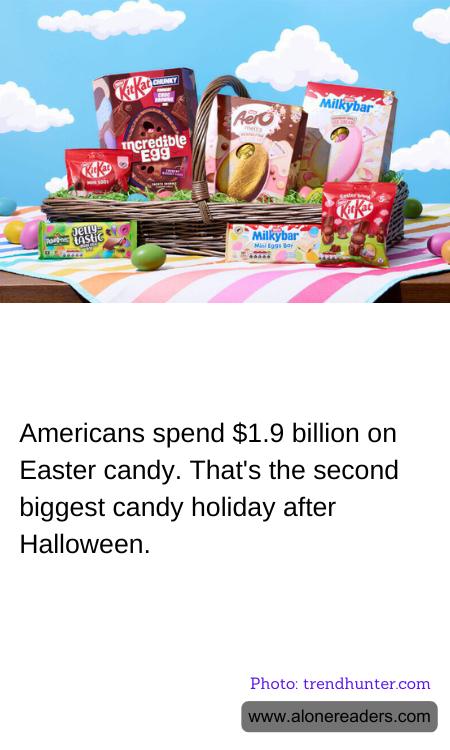
In the United States, Easter is not only a significant religious holiday but also a major occasion for candy consumption, with Americans spending a staggering $1.9 billion on Easter candy each year. This amount makes Easter the second largest candy-consuming holiday after Halloween, which holds the top spot. The tradition of candy during Easter has deep roots, with its origins intertwined with both ancient pagan practices and Christian customs. Easter candy typically includes a variety of sweets, but the most iconic are chocolate eggs and jelly beans.
The Easter egg, in particular, has a long-standing association with the season, symbolizing rebirth and new life, themes that are central to the significance of Easter in Christian theology, which celebrates the resurrection of Jesus Christ. Over time, these eggs have transformed from dyed or painted chicken eggs to hollow chocolate eggs and elaborately decorated confections. They often come filled with other types of sweets, making them a favorite among children and adults alike.
Jelly beans, another popular Easter candy, became associated with the holiday in the 1930s, though they were first created in America in the mid-19th century. Their egg-like shape makes them a perfect fit for the season, and they now come in a vast array of flavors that go far beyond the original fruit varieties. Today, manufacturers produce billions of jelly beans specifically for Easter, highlighting their popularity and their role as a staple of seasonal candy.
The economic impact of Easter candy sales is massive, reflecting broader consumer behavior and cultural trends. This high level of spending is driven by both the commercialization of the holiday and the strong traditions that encourage candy-giving. For instance, the Easter basket—typically filled with colorful grass, chocolate, jelly beans, and other sweets—has become a central element of Easter celebrations, symbolically delivered by the Easter Bunny in a manner akin to Santa Claus's role on Christmas.
As trends in consumer preferences and awareness around health and wellness evolve, the Easter candy market also sees shifts. There is a growing demand for options that are lower in sugar, as well as those that are organic or vegan, reflecting wider societal changes towards health-consciousness and ethical consumption. Candy manufacturers have responded to these trends, creating a more diverse market that can cater to a variety of dietary needs and preferences while still celebrating the festive spirit of Easter.
In summary, the vast expenditure on Easter candy in America highlights not only the country's love for sweets but also the enduring cultural traditions that keep this market thriving year after year. Despite changes in consumer preferences, the popularity of Easter candy remains a potent economic force and a significant aspect of the holiday's celebration.
