More About This Card
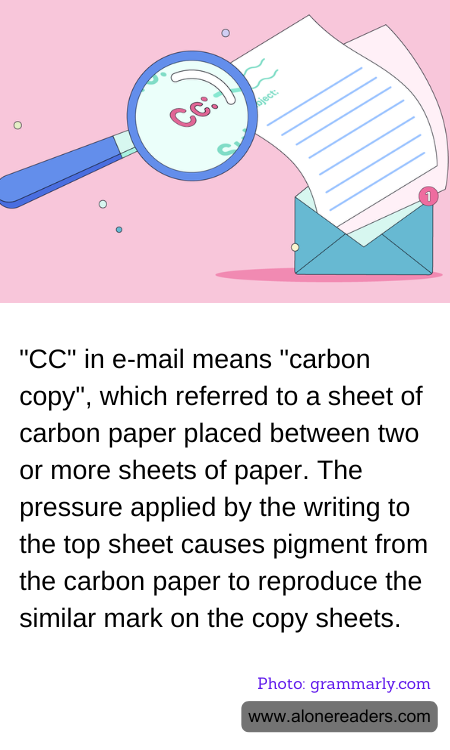
The term "CC" in the context of sending emails stands for "carbon copy," a phrase that harks back to a time when physical documents were the norm in daily communication. In the days before digital technology, if someone needed to create multiple copies of a written document, carbon paper was a common tool used for this purpose. This thin sheet of paper was coated on one side with a dark ink or pigment. When placed between two or more sheets of writing paper, the pressure from writing or typing on the top sheet transferred ink from the carbon sheet to the bottom sheet, thus creating an identical copy of the original document on the second sheet.
The concept seamlessly transitioned into the digital realm with the development of email. When you CC someone in an email, it means that you are sending a copy of your message to them, along with the primary recipient. It is a means of keeping other relevant parties in the loop, transparently sharing the same information with multiple individuals. The use of CC in emails retains the essence of distributing information just as carbon paper did but does so in an instant and without physical boundaries. This feature becomes particularly useful in a business setting, where keeping multiple team members updated on the latest communications is crucial.
Moreover, the "BCC" or "blind carbon copy" function extends this utility by allowing the sender to hide the identities of those being copied on the email. It reflects a deeper layer of strategy in communication, ensuring privacy and discretion when necessary. The evolution from physical carbon paper to the digital CC feature in emails is a fascinating example of how technology adapts and evolves old practices for modern efficiency and convenience.