More About This Card
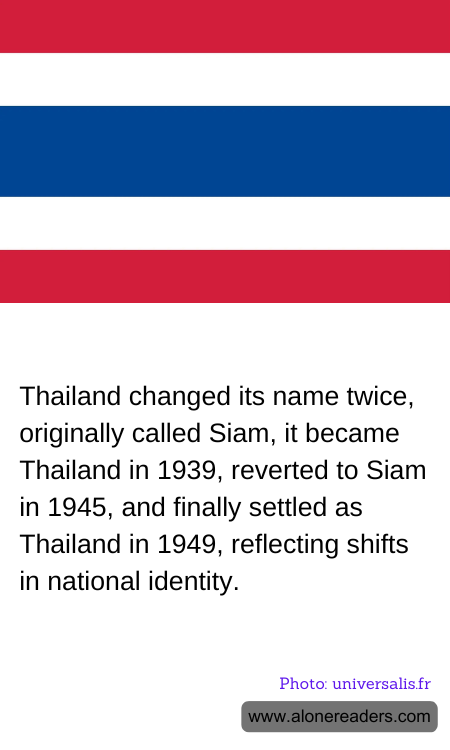
Thailand, known for its rich history and cultural heritage, has undergone significant transformations over the years, not just in its political and social domains but also in what the nation calls itself. The country formerly known as Siam underwent several name changes in the 20th century that reflect broader shifts in its national identity and alignment.
Originally known as Siam, the country first changed its name to Thailand in 1939. This change was part of a nationalism-driven policy by then Prime Minister Plaek Phibunsongkhram who sought to modernize the country and foster a sense of Thai national identity that distinguished it from its neighboring countries and colonial powers. "Thailand" means "land of the free," and the name was intended to emphasize the country's independence, solidarity, and significant ethnic Thai majority.
However, this initial renaming was short-lived. Following the end of World War II in 1945, the country briefly reverted to its original name, Siam. This reversal was influenced by the complex political landscape post-war and the overthrow of Phibunsongkhram's militaristic government. The reversion to Siam was seen by some as an attempt to restore historical continuity and reject the nationalist fervor that had characterized the pre-war and wartime periods.
The name Thailand was adopted once again in 1949 and has remained so since then. This second renaming under the premiership of Phibunsongkhram, who returned to power, was reaffirmed with strong support, reflecting a settled preference for a national identity that embraced modernity while respecting traditional historical roots. This change coincided with a period of reconstruction and realignment with Western powers during the early stages of the Cold War.
Thus, these shifts in the nation's name from Siam to Thailand and back, and then to Thailand again, were deeply intertwined with Thailand's internal politics, responses to external pressures, and evolving sense of identity. Today, Thailand is recognized globally by this name, which symbolizes its unique culture, independence, and the unity of its people.