More About This Card
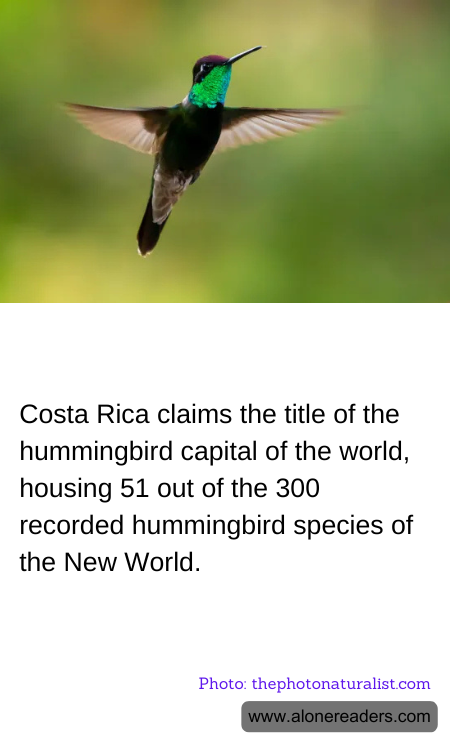
Costa Rica is recognized as the hummingbird capital of the world, a title that reflects the country's extraordinary biodiversity and commitment to conservation. This Central American nation, known for its lush rainforests, towering volcanoes, and extensive coastlines, serves as a habitat to 51 of the approximately 300 hummingbird species known in the New World. This remarkable diversity in such a relatively small area underscores Costa Rica's ecological wealth and the unique environmental conditions that favor avian diversity.
The hummingbirds of Costa Rica are as varied in color and form as the landscapes they inhabit. From the fiery-throated hummingbird, which sports a brilliant patch of iridescent feathers on its throat, to the diminutive scintillant hummingbird, each species adds a splash of color and dynamism to the ecosystem. These birds are critical pollinators for a variety of tropical plants, many of which have evolved flowers perfectly suited to the long, specialized bills of hummingbirds. The interdependence between these birds and their floral resources is a stunning example of coevolution and ecological intricacy.
Costa Rica’s dedication to preserving its natural heritage is evident in its extensive system of national parks and protected areas that cover about one-quarter of the country's land area. These protected areas ensure that hummingbirds, along with countless other species of wildlife, have sanctuaries free from the pressures of urban development and deforestation. Ecotourism, which is both a major component of Costa Rica’s economy and a significant educational resource, plays a crucial role in sustaining conservation efforts. Visitors from around the globe come to witness the dazzling spectacle of these flying jewels, contributing to the local economy and raising awareness about the importance of biodiversity.
The conservation of hummingbirds in Costa Rica is not just about preserving a charismatic group of birds. It represents a broader commitment to maintaining the ecological balance and understanding the critical role each species plays in the health of tropical ecosystems. By protecting hummingbirds, Costa Rica not only preserves its natural heritage but also maintains the ecological functions essential for the survival of countless other species. Thus, the nation's efforts serve not only to delight bird watchers and naturalists but also to sustain the complex web of life that characterizes one of the most biodiverse regions on Earth.