More About This Card
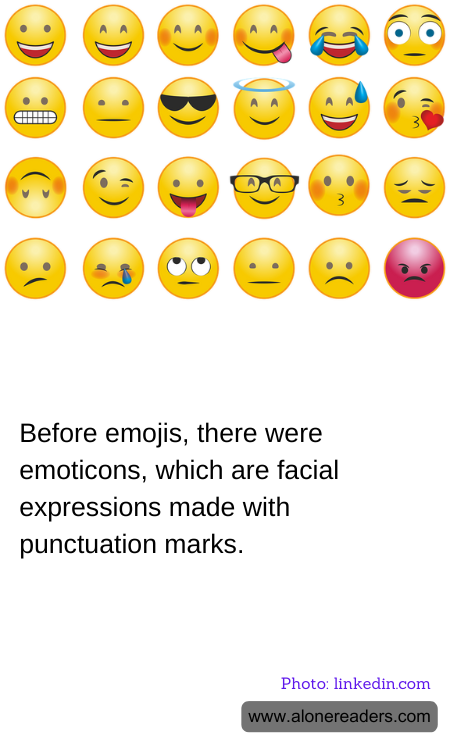
Before the vibrant array of emojis became ubiquitous in digital communication, emoticons served as a simpler yet effective way to convey emotions and nuances in text-based messaging. Emoticons, a portmanteau of "emotion" and "icon," consist of various punctuation marks, letters, and numbers arranged to create pictorial representations of facial expressions. This method allowed users to indicate tone and emotion in an otherwise flat text landscape, helping prevent misunderstandings and adding a personal touch to online interactions.
The history of emoticons dates back to the 1980s, predating emojis by decades. One of the earliest documented uses of an emoticon was by computer scientist Scott Fahlman in 1982. On a bulletin board at Carnegie Mellon University, Fahlman suggested using :-) to denote jokes and :-( to signify more serious posts. This idea quickly caught on, spreading beyond academic circles to become a staple of internet communication.
Unlike emojis, which are standardized graphics provided by device keyboards, emoticons are text-based, giving them a universal accessibility. They don't require any special software to use; any standard keyboard can create them, which contributed to their rapid adoption around the world. This ease of creation also allowed for a vast array of expressions, as users could craft unique emoticons by rearranging standard keyboard symbols. Some emoticons like :-) and ;-) have remained widely recognized and commonly used.
The transition from emoticons to emojis marked a significant shift in digital communication, reflecting advancements in technology and changes in user preferences. Emojis offer more detailed, colorful, and diverse representations, which include not only emotions but also a wide array of objects, places, weather conditions, and animals. Each emoji is a specific image file, which has led to some issues with representation across different devices and platforms—something that rarely happened with the more universal, text-based emoticons.
Despite the rising dominance of emojis, emoticons hold a nostalgic charm and continue to be used by many who appreciate the creative and retro aspect of assembling punctuation marks into expressions. Whether it's the simplicity or the nostalgia, emoticons remind us of the early days of internet culture and how a few simple symbols helped pave the way for the rich, visual language that emojis now provide. As digital communication evolves, both emoticons and emojis will likely continue to play roles, adapting to new trends and technologies while serving the timeless need to express human emotion in text.