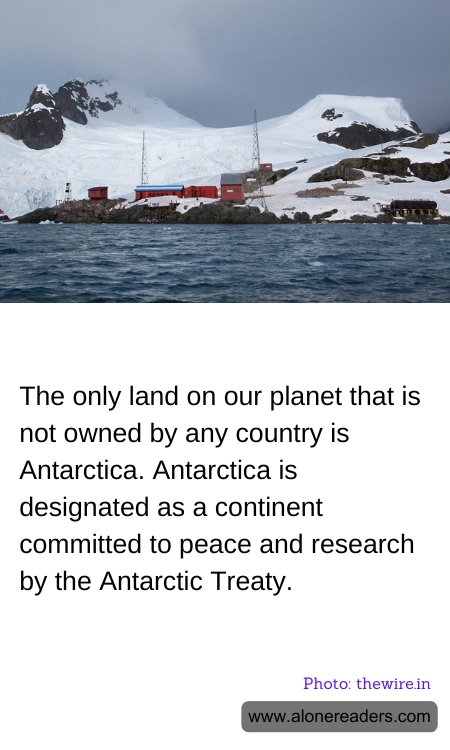
Antarctica stands out as a unique expanse in the world, being the only landmass that is not claimed and governed by any specific nation. This pristine wilderness, larger than Europe and nearly twice the size of Australia, is governed by a collective agreement known as the Antarctic Treaty. Established in 1959 and entered into force in 1961, the treaty has been signed by over 50 countries and serves as a diplomatic expression of cooperation and peace.
The primary aim of the Antarctic Treaty is to ensure that Antarctica remains a natural reserve devoted to peace and science. It explicitly prohibits military activity, mineral mining, and nuclear testing and waste disposal, thus preserving the continent's ecological integrity. Instead, the region is dedicated to scientific research and the study of its unique ecosystem and climate, which can offer insights into global climate change and other environmental issues.
The collaborative nature of scientific endeavor in Antarctica is unprecedented. Research stations scattered across the continent host scientists from around the world who study a variety of subjects including meteorology, geology, oceanography, and biology. This research is critical not only for understanding Antarctica itself but also for its implications concerning global processes. The continent's ice cores, for instance, contain bubbles of ancient air that provide a historical record of Earth's atmosphere and help scientists predict future climate scenarios.
Moreover, the treaty promotes international cooperation as it requires that all findings from research activities be shared and discussed among the participating nations. It also ensures that all plans for scientific programs are exchanged to avoid interference with ongoing activities.
In a world often divided by territorial disputes and conflicts, Antarctica serves as a beacon of international unity and a reminder that cooperation can lead to meaningful discoveries and mutual benefits. The conservation measures and collaborative research efforts in Antarctica not only help protect its own untouched environment but also provide invaluable data that can be used to confront global challenges like climate change. Maintaining this spirit of cooperation and dedication to peace and science is vital as it not only preserves the continent but also aids in the sustainable future of the entire planet.
