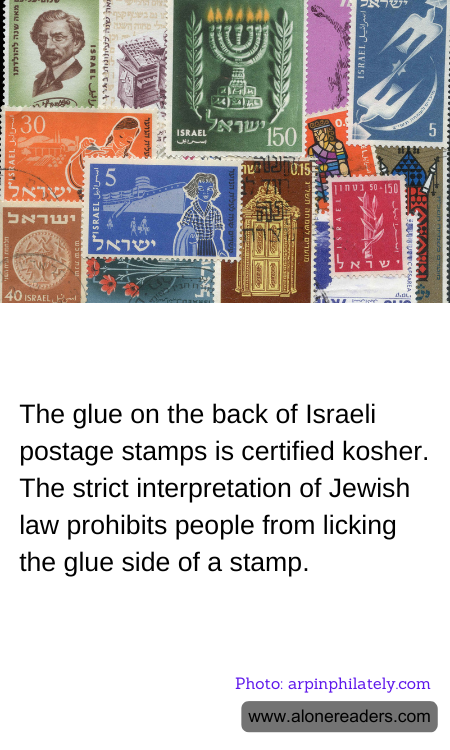
In Israel, a fascinating aspect of daily life interweaves religious observances with modern necessities. One such blend can be observed in the apparently mundane act of using postage stamps. In an effort to consider the religious practices of its Jewish population, Israel has certified the glue on the back of its postage stamps as kosher. This certification ensures that even the most observant Jews can use stamps without concern, adhering to the dietary laws set out in the Torah.
Kosher certification usually pertains to food products, dictating that they comply with kashrut, the set of Jewish dietary laws. This includes regulations on the types of animals that can be eaten, how food should be prepared, and what foods must be consumed separately. Surprisingly, this attention to dietary detail extends to stamp glue because certain interpretations of Jewish law suggest it might accidentally be ingested while licking a stamp. To avoid the dilemma where consuming non-kosher substances—even unintentionally—might occur, certification bodies analyze the stamp glue to ensure it contains no animal derivatives or other non-kosher substances.
The decision to certify the glue as kosher might seem minor, but it is a reflection of the deep-seated tradition of making daily life in Israel compatible with religious guidelines. It’s not just about observing the laws in obvious ways, such as food consumption or Sabbath observance. It’s also about recognizing the less obvious intrusions of modern life into the religious sphere and addressing them in thoughtful ways, ensuring that even the smallest details, such as the adhesive on postage stamps, are in harmony with religious values. This meticulousness highlights the pervasive importance of religion in everyday Israeli life, and it ensures inclusivity so that all citizens can participate in societal functions without compromising their religious principles. In a broader sense, this practice also accentuates the unique cultural attentiveness that characterizes much of Israeli public and private life.
