More About This Card
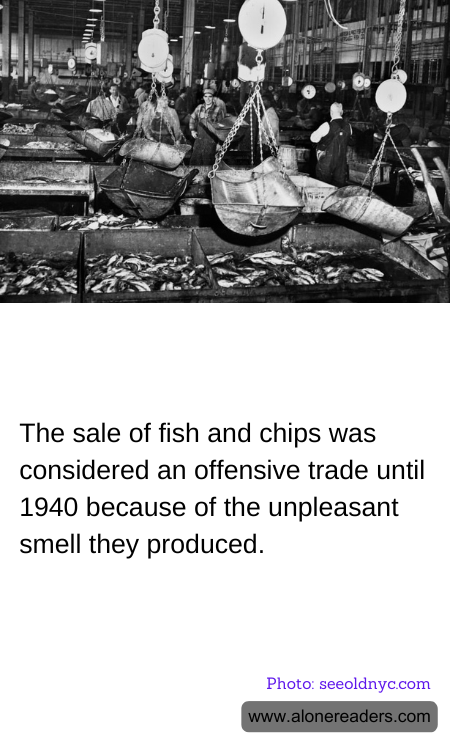
Before 1940, the sale of fish and chips was categorized in some areas as an "offensive trade" due to the strong odors emitted during its preparation. This classification often grouped fish and chip shops with other trades considered nuisances due to their smells or other environmental impacts, such as tanneries and slaughterhouses. These odors arose primarily from the use of old-fashioned cooking oils and methods that did not efficiently extract or control fumes.
Despite the odorous challenges, fish and chips were a beloved staple among the working class in Britain, gaining prominence as an affordable and filling meal. The dish itself originated around the 1860s when Joseph Malin opened the first recorded combined fish and chip shop in London; however, examples of similar establishments date back even earlier to the separate traditions of fried fish introduced by Jewish immigrants and chipped potatoes.
The turning point that began reshaping public and regulatory perception of fish and chip shops came with advances in technology and public health standards. During and after World War II, improvements were made in the ventilation of cooking areas and the quality of oils used for frying, which significantly reduced the intensity of smells expelled into surrounding areas. Around the same period, fish and chips had become so culturally significant that authorities ensured they were one of the few foods not rationed during wartime.
Today, fish and chips continue to be a cherished dish across the UK, representing not just a culinary preference but also a piece of cultural heritage. The evolution of this industry from a so-called "offensive trade" to a national symbol highlights not just changes in regulatory and technological frameworks, but also in public sentiment and national identity. This story is a compelling reflection of how culinary practices can intersect with historical and socio-economic developments, transforming community landscapes and national narratives.