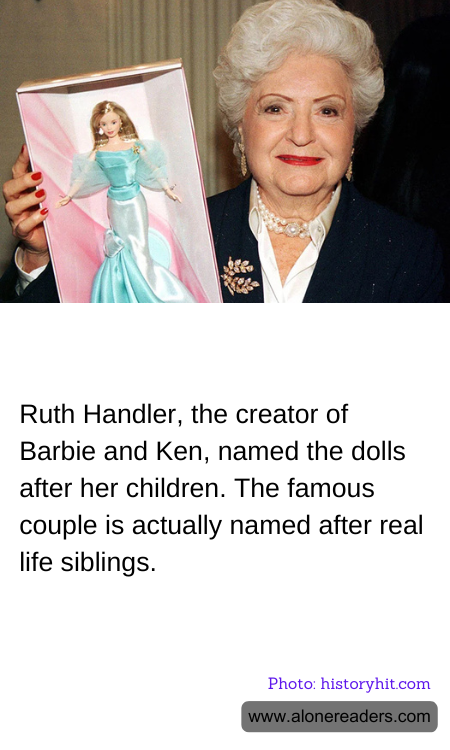
In 1959, the toy world was revolutionized by the introduction of Barbie, a doll created by Ruth Handler, the co-founder of the toy company Mattel. Ruth Handler's inspiration for Barbie came directly from seeing her daughter Barbara play with paper dolls and imagining them in grown-up roles. This observation led to the creation of a three-dimensional doll with an adult body that could project the futures kids dreamt about during their playtime. Two years after Barbie’s successful launch, the Barbie doll family grew with the addition of Ken in 1961, named after Ruth's son, Kenneth.
The choice to name these iconic dolls after her own children, Barbara and Kenneth, is both a touching personal tribute and a clever marketing insight. Barbie's and Ken’s creation marked a pivotal shift in the design and marketing of toys for children, moving from baby dolls that encouraged nurturing aspects to ones that encouraged imagination and aspirations regarding future adult roles. Besides, by naming these dolls after real children, Ruth Handler gave the toys a personal touch that could help other children relate to them as everyday peers.
The introduction of Barbie also had significant cultural implications. Designed to exhibit the fashion and lifestyle of contemporary women, Barbie offered something no other doll on the market did at the time. This introduction filled a niche and satisfied the young girls’ desire to dream about their futures, rather than only nurture. The immense variety of Barbie's career options made her a role model for ambitious young girls everywhere.
Ruth Handler’s naming of the dolls reflects more than just a familial nod; it speaks to the heart of Mattel’s philosophy of creating personal and relatable toys. Barbie and Ken have become more than just children’s playthings; they are cultural icons, reflecting the changes in societal norms and the evolution of roles across gender lines. Over the years, the characters have adapted to the changing times, which has helped maintain their popularity. From astronauts to presidential candidates, there seems to be no limit to what Barbie and Ken can aspire to or achieve, making the story of their names and origins all the more special for generations who have grown up with them.
