More About This Card
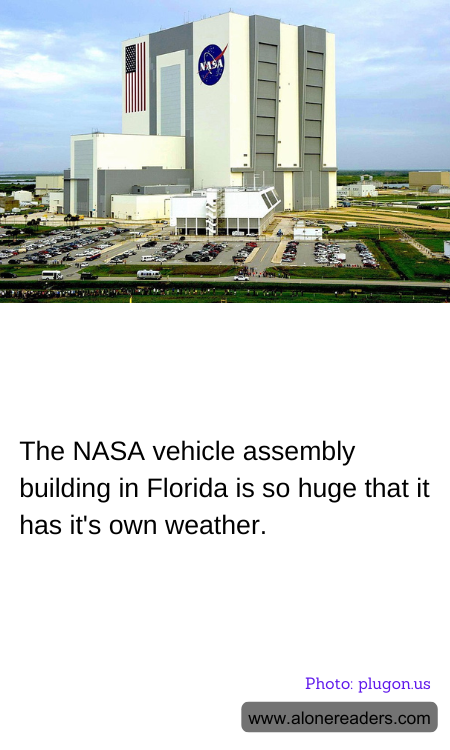
The Vehicle Assembly Building (VAB) at NASA's Kennedy Space Center in Florida is one of the largest buildings in the world by volume. Standing 526 feet (160 meters) tall and covering 8 acres (3.25 hectares), it was originally built to assemble the massive Saturn V rocket for the Apollo program and is currently used for assembling various spacecraft, including the Space Launch System (SLS).
One of the most fascinating aspects of the VAB is its own microclimate. This phenomenon occurs due to the sheer volume of the building. The space inside is so vast that it can form rain clouds under specific conditions. This internal weather system was more noticeable when the building's air conditioning was not as powerful as it is today. Before enhancements were made, employees would sometimes observe rain clouds forming near the ceiling of the cavernous structure.
The building's design includes four high bays, each one large enough to allow for the assembly of rockets standing upright. The large doors on the VAB, which are some of the tallest in the world, facilitate the movement of these giant rockets. The scale of operations within the VAB and the processes related to rocket assembly contribute to the heat and humidity inside, which are the primary ingredients for cloud formation.
The internal weather at the VAB, although a rarity now due to improved climate control systems, speaks to the incredible scale and unique environmental challenges posed by large indoor spaces. Such phenomena underscore the engineering and architectural marvels inherent in the facilities essential for space exploration. The VAB remains a critical site for NASA, continuing to support America's space endeavors and standing as a testament to the ambitions and achievements of space travel.