More About This Card
One of the more peculiar physiological responses in the human body is the wrinkling of fingers and toes when they’re submerged in water for an extended period. This wrinkling is often assumed to be a result of water absorption, but in reality, it's an active process controlled by the autonomic nervous system. This mechanism highlights a fascinating aspect of human biology — its potential evolutionary advantages and, as recent research suggests, its connections to nerve function.
When fingers and toes wrinkle due to water exposure, it is actually because of the constriction of blood vessels beneath the skin, triggered by the autonomic nervous system, which governs involuntary actions. This response theoretically helped our ancestors to get better grip in wet or submerged conditions — imagine trying to pick up wet objects or walk in a slippery environment. Thus, wrinkled fingers could have provided an evolutionary advantage.
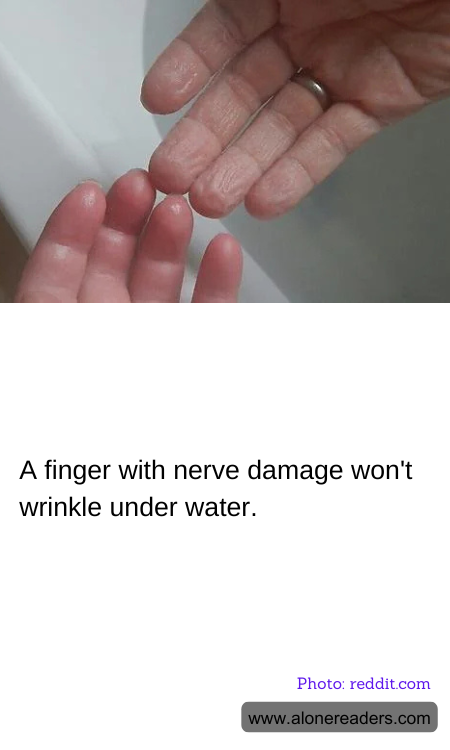
However, in cases of nerve damage, this seemingly simple and automatic process doesn't occur. When a nerve is damaged, especially the nerves controlling the blood vessel constriction in the skin — typically those in the fingers or toes — the signaling from the brain to the affected extremities is impaired or entirely lost. Consequently, when the nerve cannot send the appropriate messages, the physiological changes necessary to cause wrinkling do not occur.
For instance, someone with significant nerve damage in their fingers due to conditions such as diabetes, neuropathy or even injuries affecting nerve integrity can immerse their hands in water for an extended period without experiencing the typical pruney effect seen in healthy individuals. This absence of wrinkling serves as a non-invasive indication of nerve function and can sometimes be used by medical professionals to assess the extent of nerve damage.
This phenomenon underlines how our bodies' smallest reactions can often tell a bigger story about our overall health. Thus, a finger struggling to wrinkle in water isn't just a party trick or a piece of trivia; it's a window into the complicated and indispensable interactions within our nervous system. Such insights continue to fuel both our understanding and curiosity concerning the intricate workings of the human body.