More About This Card
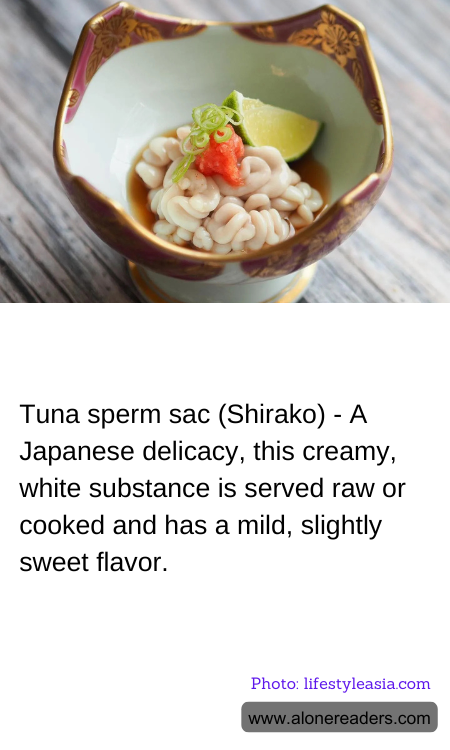
Tuna sperm sac, known as Shirako in Japan, is a delicacy that may seem unusual to those unfamiliar with it, but it holds a cherished spot in Japanese cuisine. Shirako, which literally translates to "white children", refers to the sperm sacs of male fish, primarily from cod or pufferfish, though tuna is also a popular source. The appearance of Shirako is soft and creamy, often compared visually to small white lobes or brains.
Shirako is prized for its delicate texture and mild, subtle sweetness. It can be served in a variety of ways, both raw and cooked, which allows it to appeal to a broad range of palates. When eaten raw, typically in sushi or sashimi forms, it is enjoyed for its smooth, custard-like texture that melts in the mouth, offering a unique sensory experience. The taste is refined, with a gentle hint of the sea that is not overpoweringly fishy, making it a favorite among those who appreciate nuanced flavors.
Cooked Shirako takes on a slightly different character. It can be incorporated into dishes such as tempura, where it is lightly battered and fried to a golden crisp while remaining creamy on the inside. It can also be found gently poached in a savory broth, which infuses the Shirako with additional flavors while maintaining its soft texture. In some traditional preparations, it is grilled, which adds a subtle smokiness that complements its natural flavor.
The nutritional profile of Shirako is also notable, as it is rich in protein and omega-3 fatty acids, making it a healthy choice for those who enjoy indulging in it. In culinary circles and beyond, Shirako is appreciated not just for its taste and texture but also for its nutritional benefits.
Despite its popularity in Japan, Shirako can understandably be a challenge for the uninitiated due to its origin and unique texture. However, those who are adventurous in their culinary explorations often find that Shirako is an exquisite delicacy that offers a glimpse into the sophisticated and diverse world of Japanese cuisine. Its ability to be both a standout feature in a dish or a subtle complement makes it a versatile ingredient that reflects the depth and precision of Japanese culinary arts.