More About This Card
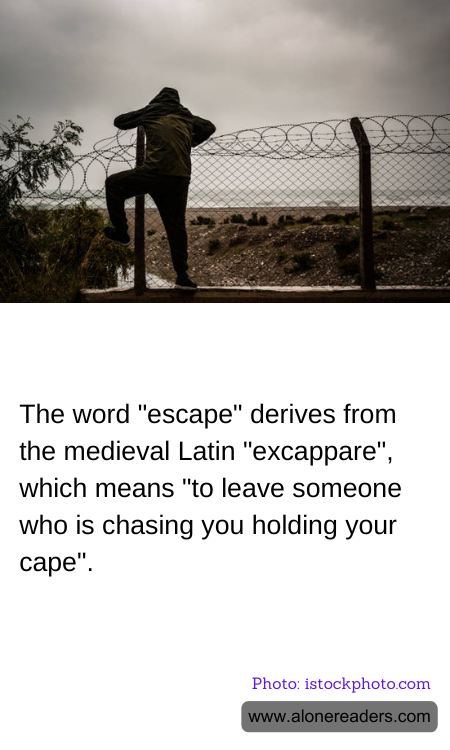
The concept of "escaping" is intriguing, not only in its practical application but also in its linguistic voyage. The word "escape" itself harbors a rich etymological background that traces back to the medieval Latin term "excappare." This term, fascinating in its imagery, literally translates to "to leave someone who is chasing you holding your cape." This vivid description reveals much about the historical contexts in which escaping was often vital - a dynamic of pursuit and evasion, linked by the symbolic act of leaving behind a piece of one’s attire, perhaps to gain a crucial moment to evade capture.
Over time, "excappare" evolved into the Old French "eschaper," and subsequently into the English "escape." The transformation of this term not only reflects shifts in language but also changes in the cultural and social dynamics that influence such concepts. In the modern context, "escape" has expanded far beyond its medieval roots, encompassing a broad spectrum of meanings. Today, it can refer to physical escape, such as fleeing from captivity or danger, as well as more metaphoric forms, like escaping from routine, stress, or mundane realities through various outlets such as travel, literature, or cinema.
The evolution of the word "escape" underscores the adaptive nature of language, how it mirrors changing human needs and conditions. While today we may not literally leave a pursuer holding our cape, the essence of escape still involves a release from some form of pursuit – be it literal, emotional, or psychological. This connects the modern use of the word with its etymological origins, preserving the feel of urgent necessity and the desire for freedom embedded in its historical usage. As our world continues to evolve, so too will the concept of escape, likely adapting anew to future contexts and needs, but always reminding us of our perpetual quest for liberty and relief in various forms.