More About This Card
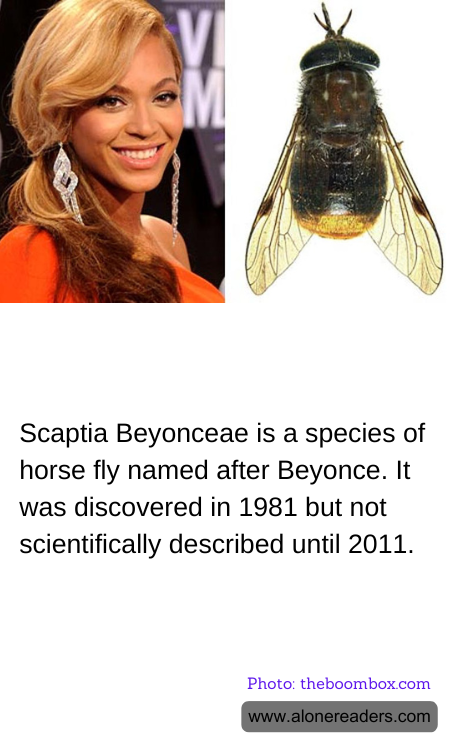
Scaptia beyonceae is a fascinating species of horse fly, which gained an added layer of intrigue and fame through its connection to music icon Beyoncé. This unusual insect was first discovered in 1981 in the Atherton Tablelands in northeastern Australia. Despite its early discovery, Scaptia beyonceae wasn’t officially described and named until three decades later, in 2011. The delay in scientific description allowed for a unique opportunity in the naming process.
The choice to name the fly after Beyoncé in 2011 was inspired by the unique gold hairs on the fly's abdomen, which researchers thought reminiscent of the famous singer's often golden outfits. Bryan Lessard, a researcher from Australia’s Commonwealth Scientific and Industrial Research Organisation (CSIRO), played a key role in naming the fly. He suggested that naming the species after the pop star could help highlight the importance of taxonomy and promote biodiversity studies, which can often be overlooked scientific fields.
Scaptia beyonceae belongs to the genus Scaptia, a group of flies known for their role as pollinators as well as pests. Female horse flies, in general, are known for biting animals, including humans, as they require blood to produce eggs. However, they also play a significant role in the ecosystem, particularly through pollination of flowers.
The decision to name the species after Beyoncé attracted significant media attention, which was beneficial for science communication. It served as an engaging way to draw public interest to the study of insects and underscored the fact that much of the world's biodiversity is still undocumented and unnamed. This naming also illustrates a broader trend in scientific nomenclature where researchers opt for memorable or meaningful names in an effort to bridge the gap between scientific communities and the public.
The discovery and naming of Scaptia beyonceae not only adds to our understanding of biodiversity but also highlights the playful side of scientific nomenclature. As new species continue to be discovered, the stories behind their names will inevitably contribute to the rich tapestry of natural history and encourage public engagement with science.