More About This Card
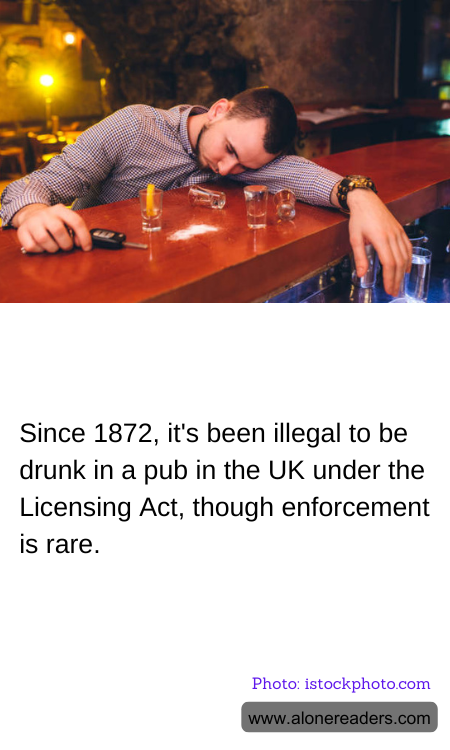
In the United Kingdom, a seemingly paradoxical law exists where it has been illegal to be drunk in a pub, thanks to the Licensing Act of 1872. This piece of legislation makes it an offense for any proprietor of a licensed premises to permit drunkenness or disorderly conduct on the premises, and similarly, it is illegal for someone to be drunk in the pub. Technically, this means that both the person consuming excessive alcohol and the licensee serving them could face penalties ranging from fines to more severe legal consequences.
The rationale behind this law, passed during the Victorian era, a period often characterized by a drive towards moral rectitude and social reform, was likely intended to curb public drunkenness and the social ills associated with it. This was a time when alcohol consumption was seen not just as a personal vice but as a societal menace that contributed to disorder, crime, and poverty. By making it illegal to be drunk in places where alcohol is specifically served, lawmakers aimed to impose a sense of responsibility both on drinkers and on those who served them.
Despite its longevity and the clear stipulations it sets, the enforcement of this law is notably infrequent in modern times. This is partly because social norms around drinking have evolved, and police resources are often directed towards more pressing issues. Additionally, the culture around drinking in the UK has a long tradition and pubs are viewed as community gathering places rather than just spaces for alcohol consumption. The focus in contemporary law enforcement when it comes to alcohol consumption in pubs tends to be more on preventing extreme cases of disorder and dealing with issues arising from it, such as aggressive behavior or driving under the influence, rather than simply penalizing someone for being drunk.
Moreover, modern British pubs and bars often have their own measures in place to manage excessive drinking. Responsible service of alcohol policies are observed, including training staff to recognize the signs of intoxication and to refuse service to overly intoxicated patrons. These internal controls are complemented by broader public health campaigns aimed at promoting responsible drinking.
In conclusion, while it might still be technically illegal to be drunk in a pub in the UK, the application of this law is very much influenced by social attitudes and practical policing priorities. It serves more as a legal framework to support responsible drinking practices rather than a regularly enforced statute. The evolution of societal norms around alcohol and the adaptation of the service industry continue to shape how such laws are applied in everyday life, marking an interesting intersection of law, culture, and social behavior.