More About This Card
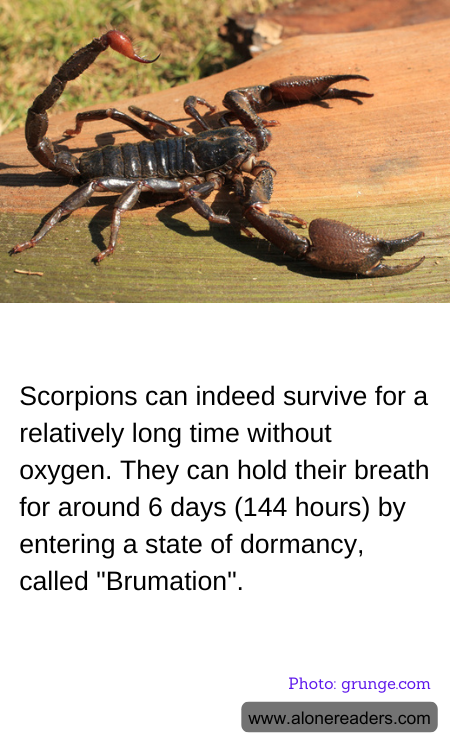
Scorpions, those intriguing and often misunderstood arachnids, possess a remarkable ability to survive in extreme conditions. One of their most fascinating survival skills is their ability to withstand periods without oxygen. Scorpions can hold their breath for up to 6 days, a capability that is linked to a state known as brumation. Brumation is similar to hibernation in mammals but is specific to cold-blooded animals. It involves a drastic reduction in metabolic rate, allowing the scorpion to conserve energy and survive in low-oxygen environments or situations where oxygen is not readily available.
This adaptation is particularly vital given the harsh environments scorpions often inhabit. Many scorpion species are found in deserts or arid regions where resources can be scarce, and the ability to survive without oxygen temporarily can be a significant advantage. During brumation, scorpions enter a dormant state where their body processes slow down dramatically. This state of reduced physiological activity helps them to not only survive without oxygen but also conserve water and energy—critical factors in their overall survival strategy in unforgiving climates.
This ability of scorpions to hold their breath for extended periods is a striking example of how living organisms adapt to their environments. It highlights the complex evolutionary processes that have equipped such creatures to manage and thrive under conditions that would be lethal to many other forms of life. In studying these remarkable survival strategies, scientists can gain insights into the adaptability and resilience of life on Earth, providing broader implications for understanding life in varied ecological niches and potentially even in extraterrestrial environments.