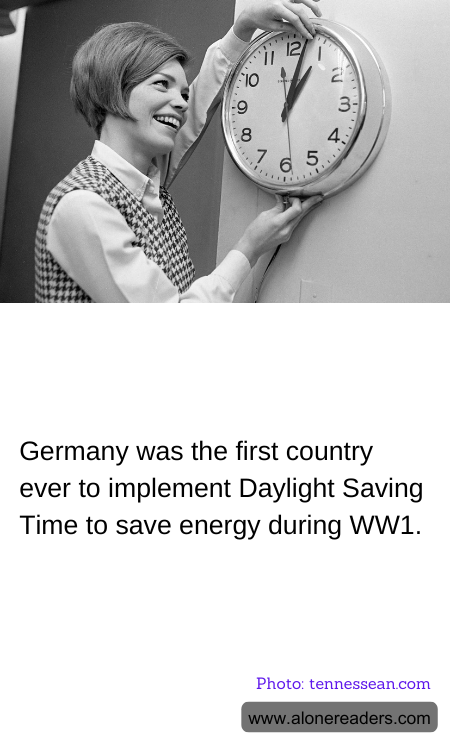
Germany was indeed a pioneer in the adoption of Daylight Saving Time (DST). The practice, which involves setting clocks forward by an hour during the warmer months in order to extend evening daylight, was first implemented by Germany during World War I. The rationale was to conserve energy by reducing the need for artificial lighting, thereby saving coal for the war effort. This initial step was taken on April 30, 1916, when the German Empire and its ally Austria-Hungary organized the first nationwide implementation.
The idea, however, was not a German invention. It was first proposed by New Zealand entomologist George Vernon Hudson in 1895 and later independently by British builder William Willett in 1907 who advocated for it to the British Parliament as a way to save on energy costs and to make better use of daylight. Despite these earlier proposals, it was Germany’s wartime context that catalyzed the adoption of DST.
Following Germany's lead, many other countries soon adopted DST. The United Kingdom introduced it a few weeks later, on May 21, 1916. The United States followed suit in 1918. Over the years, the practice has been adopted and then abandoned by various countries and is currently used in more than 70 countries worldwide.
The rationale for DST has evolved over the years. While it was originally adopted as a way to save energy, today it is seen as a way to promote better use of daylight during the longer days of the year. Critics of DST argue that the energy savings are negligible and that the biannual shift is disruptive to human health and daily rhythms.
Despite these controversies, DST remains a significant part of timekeeping in many parts of the world, reminding us of the impact historical events can have on our daily lives even a century later.
