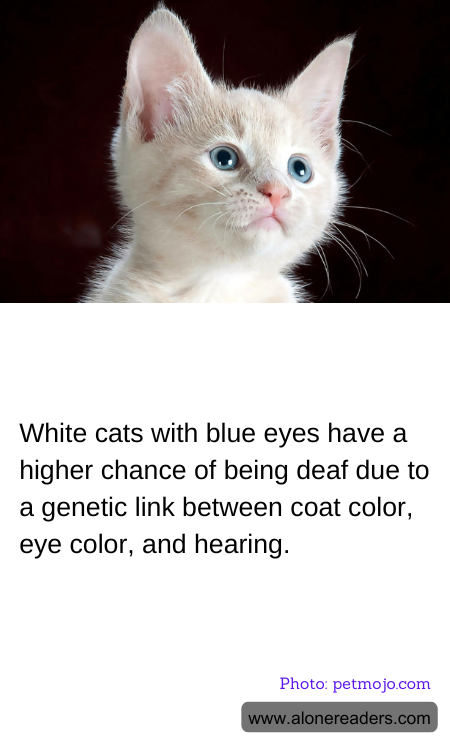
White cats with blue eyes are admired for their striking appearance, but many are unaware of the genetic peculiarities that link this striking visual trait to potential health issues, notably deafness. This condition in white cats, particularly those with blue eyes, is attributed to a genetic trait associated with their pigmentation.
The gene responsible for this is the 'white' gene, which suppresses the color on the cat's coat, leading to a completely white appearance. This same gene can also affect the inner ear's development, leading to auditory complications. The presence of blue eyes further increases the likelihood of deafness, which can occur in one or both ears. The reason behind this is closely associated with how pigmentation cells, necessary for normal ear function, are developed and maintained.
In blue-eyed white cats, the genetic instructions for pigmentation are disrupted not only on the coat but also in the eyes, and critically, within the ears. Normally, these cells are crucial for the proper functioning of the ear's auditory structures. A deficiency or absence of these cells during development can lead to malformation or degeneration of these structures, resulting in hearing impairment or total deafness.
Interestingly, not all white or blue-eyed white cats are deaf, and the condition can vary even between littermates. Genetic inheritance can be quite complex, with certain cats carrying the gene without expressing it, which means they will not be deaf and will not showcase the associated physical traits but can pass the gene to their offspring. Screening for deafness in white, particularly blue-eyed kittens, is a straightforward process involving a BAER (Brainstem Auditory Evoked Response) test, which can effectively diagnose the extent and bilateral nature of the condition.
Understanding of these genetic links not only helps breeders in making informed decisions but is essential for owners, too. This ensures that deaf cats receive the appropriate care, such as keeping them indoors for safety and using visual or tactile signals for communication. This awareness allows these visually stunning cats to lead full and enjoyable lives despite their potential sensory limitations.
