More About This Card
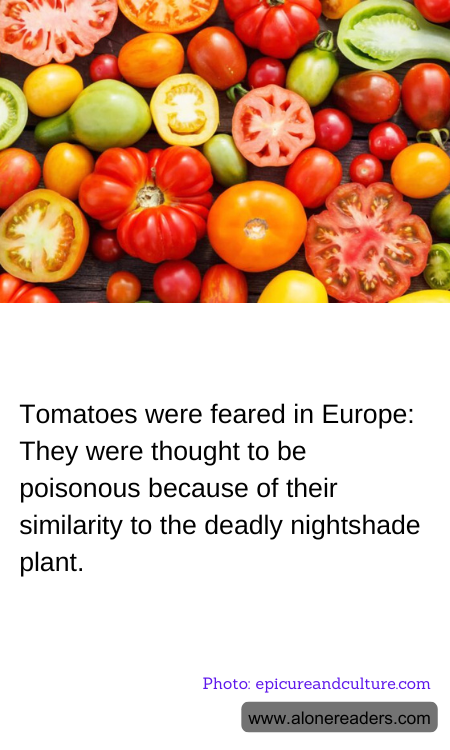
For many centuries, tomatoes were feared and spurned in Europe. The assumption that tomatoes were poisonous largely stemmed from their botanical relationship to the deadly nightshade family, a group of plants known for their toxic properties. This family includes not only the toxic belladonna but also more benign plants like potatoes and eggplants. Originally native to South America, tomatoes were introduced to Europe by Spanish explorers in the 16th century. However, instead of embracing this vibrant fruit, Europeans greeted it with suspicion.
The tomato’s bright red color, which we now consider appealing, was a significant part of the problem. In the 1700s, a prevailing belief among Europeans was that vividly colored foods could be poisonous. This was compounded by the fact that the plant’s leaves do contain toxic compounds, which possibly led to the conclusion that the fruits would be equally harmful. Aristocracy was particularly prone to this fear, as they often used pewter plates, which contained high levels of lead. Acidic foods like tomatoes would cause lead to leach into the food, leading to poisoning. This unfortunate reaction reinforced the idea that tomatoes themselves were toxic.
It was not until the 1800s that tomatoes were completely exonerated in the court of public opinion. This change was partly encouraged by immigrants to America from places like Italy, where tomatoes had become a staple. As tomato-based dishes like pizza and pasta made their way into popular cuisine, the fears began to dissipate. This transformation in perception was gradual, but by the late 19th century, tomatoes were celebrated in Europe for their flavor and versatility in cooking. Today, it's almost unthinkable that this integral ingredient in so many beloved dishes was once regarded with such fear and suspicion.