More About This Card
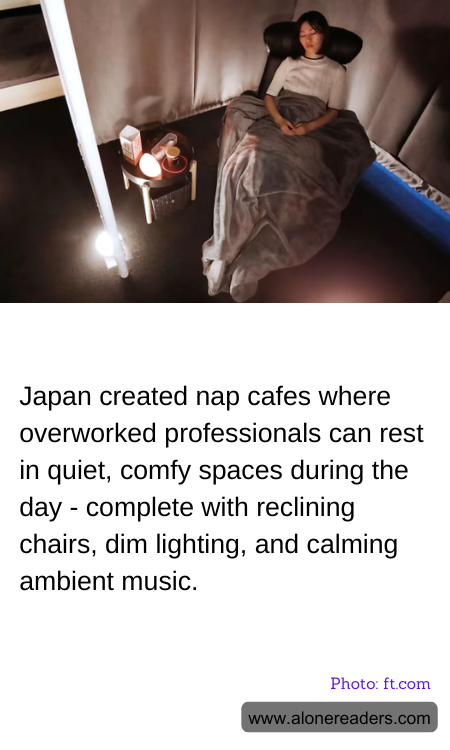
In response to the widespread problem of overwork in Japan, innovative solutions have been cropping up, among which the concept of nap cafes stands out. These cafes have been specially designed to cater to weary professionals who struggle to find a balance between the demanding work culture and personal health. The typical layout of a nap cafe includes reclining chairs that allow individuals to lie back in comfort, dim lighting that facilitates a soothing ambiance, and calming ambient music that helps drown out the chaotic noise of the city and induce relaxation.
These nap cafes not only provide physical comfort but also offer a temporary escape from the pressures of daily professional life. Usually located in business districts, they are easily accessible during lunch breaks or between meetings. The setting inside a nap cafe allows patrons to disconnect and rejuvenate, even if just for a short period. This brief reprieve can significantly enhance productivity and mental well-being, offering a refresh from the constant demands of workplace deadlines and pressures.
Adoption of the nap cafe is indicative of a broader shift in Japan towards recognizing and mitigating the adverse effects of overwork. Traditionally known for its rigorous work ethic, the country has seen rising concerns around karoshi, or death from overwork. By integrating facilities like nap cafes, Japanese society is acknowledging the need for balance and the importance of rest. The cafes have found support not just among the corporate workforce but also freelancers and travelers seeking a quiet moment. This concept has found favor for its utility in boosting overall workforce morale and efficiency and seems poised to inspire similar innovations around the globe as more cultures grapple with balancing productivity and health.