More About This Card
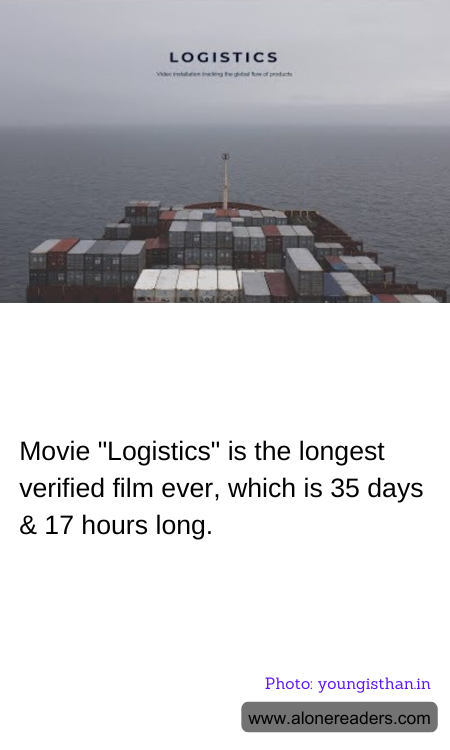
At 35 days and 17 hours in duration, "Logistics" holds the title for the longest verified film ever made, presenting a radical departure from conventional film lengths and storytelling techniques. Directed by Daniel Andersson and Erika Magnusson, the film was crafted to mirror the actual pace of consumer goods' production and transportation cycle, offering a real-time portrayal of the process. The idea was born from an ambition to make visible the typically invisible journey that consumer goods undergo before reaching the consumer.
"Logistics" began its journey in a factory in China where the manufacturing of a pedometer is filmed, then carefully follows the device's passage from warehouse, onto trucks, ships, and eventually ending up in a store in Sweden. The film's slow cinema approach allows viewers to engage with the temporal reality of logistics, turning what would usually be background processes in the global economy into a focal point of contemplation. This transformative reversal emphasizes not only the scale and complexity of global trade but also the often overlooked labor involved in the production and transportation of everyday commodities.
Upon its release, "Logistics" was met with mixed reactions. For some, its unorthodox format and commitment to showing events in real time were seen as a thoughtful and illuminating critique of modern consumerism and the hidden life of goods. For others, the sheer length and slow pacing posed a daunting viewing challenge, reframing audiences' expectations of what cinema can and should convey.
Its screening methodology is also non-traditional, often displayed in museums or art institutions around the world as part of exhibitions on modern art and commerce. This setting allows viewers to engage with the film nonlinearly, walking in and out of the experience, which contrasts sharply to the immersive narrative we expect from typical theatrical releases.
In conclusion, "Logistics" is not just a film; it's an art installation, a visual study, and a social commentary rolled into one. By challenging the concepts of time, narrative, and viewer endurance, it stands as a unique testament to the ability of film to transcend pure entertainment, becoming a tool for education and reflection on the intricate mechanisms that operate within our globalized world. Its remarkable length and format continue to stimulate discourse on the boundaries of film and art, resonating with a diverse array of audiences interested in the intersections of culture, commerce, and technology.