More About This Card
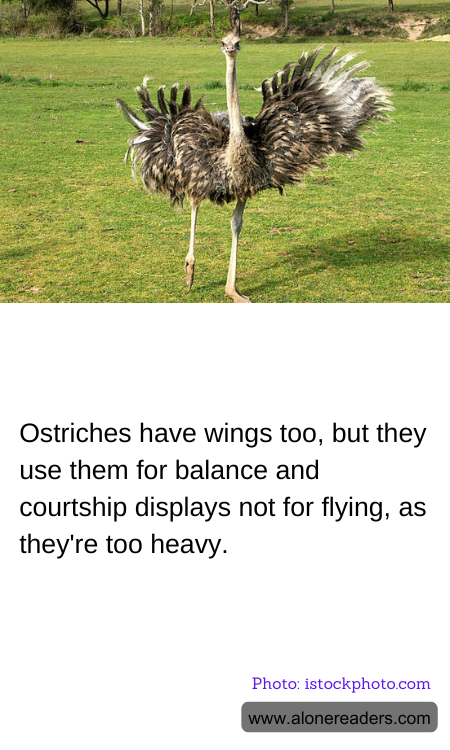
Despite being birds, ostriches are known for their running rather than flying ability. However, this does not mean their wings are useless appendages. In fact, the wings of an ostrich are crucial for several non-flight functions that are vital for their survival and reproductive success. Weighing up to 320 pounds and standing as tall as 9 feet, ostriches are the world’s largest birds, with bodies too heavy to be lifted off the ground by their relatively small wings.
Ostrich wings, which span about 2 meters when fully extended, are primarily used for balance and maneuverability during their high-speed sprints. When ostriches run, which they can do at speeds up to 45 miles per hour, they spread their wings out to help change direction swiftly and maintain stability on the ground. This use of wings as stabilizers and rudders makes them particularly agile despite their size, allowing them to quickly escape predators primarily by outrunning them.
Moreover, ostrich wings play a crucial role in mating rituals and courtship displays. During the breeding season, males perform elaborate dances to attract females, using their wings expressively to enhance their display. They wave, flutter, and dramatically spread their wings to show off their size and vigor, an important aspect of their mating behavior aimed at impressing potential mates and asserting dominance over other males.
Furthermore, the wings contribute to the ostrich's temperature regulation processes. The hot habitat of the ostrich requires efficient body cooling mechanisms. By adjusting their wings, ostriches can alter their body surface area exposed to the sun or shade, effectively controlling body temperature. Also, the wings can cover their naked thighs to warm up during cooler temperatures, utilizing their wings as insulative tools.
While they may not facilitate flight, the multi-functional wings of ostriches are a fascinating adaptation to their unique lifestyle on the ground, being instrumental in their movement, reproductive behavior, and survival in harsh environments. Through these various uses, ostrich wings are a perfect example of how evolution shapes anatomical features for specific environmental and behavioral needs even in the absence of flight.