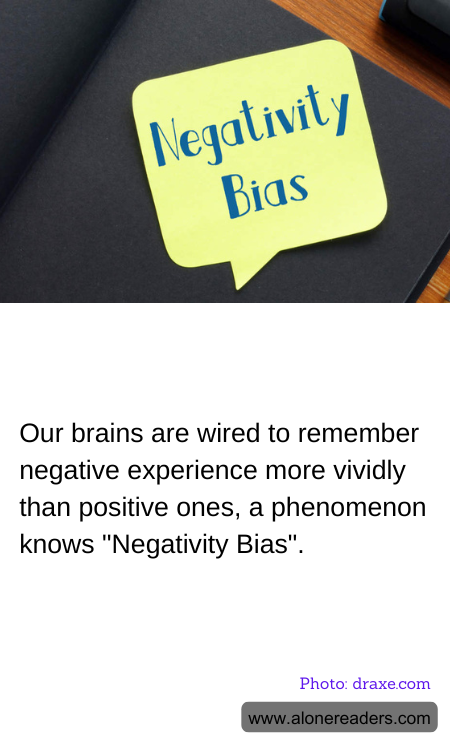
Negativity bias is a psychological phenomenon where negative experiences have a greater impact on one’s psychological state and processes than neutral or positive experiences, even when they are of equal intensity. This tendency for a stronger recall of adverse events is a basic survival mechanism that has evolved to help us recognize and avoid dangerous situations that could be life-threatening.
The roots of negativity bias can be traced back to our ancient ancestors for whom survival frequently required the ability to remember and learn from negative experiences quickly, such as the presence of a predator or the consequence of eating a toxic plant. In modern psychology, this bias explains why unpleasant thoughts, emotions, and experiences are often more memorable than positive ones. For instance, a person is likely to remember a single harsh criticism vividly and for a long time, despite receiving numerous compliments.
This bias not only influences our memories but also the way we perceive the world around us. When negativity bias is at work, we tend to see more threats in our environment and may be more focused on the negative aspects of a situation than the positive. This can affect decision-making, relationships, and even lead to a tendency towards pessimism.
However, being aware of the negativity bias is the first step toward mitigating its effects. By understanding that our brains are naturally wired to focus on the negative, we can consciously make an effort to recognize and savor positive experiences. Techniques such as gratitude journaling, mindfulness, and positive reinforcement can help retrain the brain to balance this innate negativity bias. Cultivating positive relationships and environments that bring joy can also buffer against the overwhelming influence of negative information.
Moreover, being mindful of one's media consumption is crucial because constant exposure to negative news can reinforce and strengthen the negativity bias. By choosing to engage with more balanced or positive content, individuals can actively counteract their inbuilt predispositions.
In essence, while negativity bias has played a crucial role in human survival, its influence in the context of modern-day psychological health needs to be managed for greater well-being. Emphasizing and nurturing the positive aspects of life can help create a more balanced perspective, enhancing overall life satisfaction and mental health.
