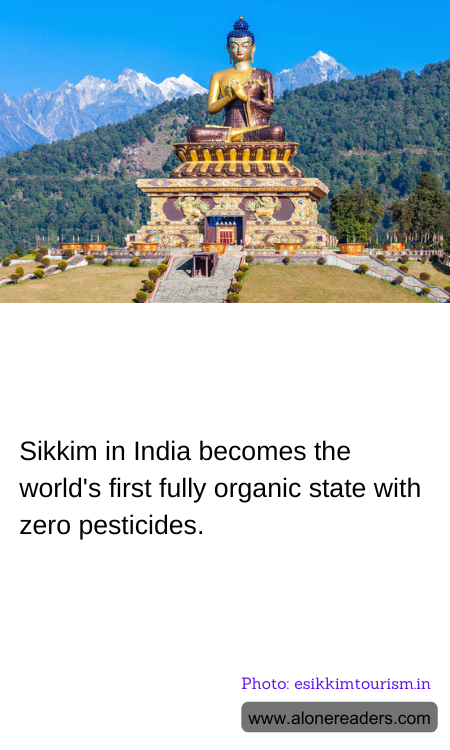
In a remarkable environmental achievement, Sikkim, a small state nestled in the Himalayas in northeast India, has been declared the world's first fully organic state. This declaration came after a transition journey that began in 2003 and culminated in 2016, positioning Sikkim as a global pioneer in sustainable agriculture. Covering an area of just over 7,000 square kilometers and with a population of around 610,000 people, Sikkim has set an extraordinary example of how concerted government policy and the cooperation of local citizens can lead to significant environmental and health benefits.
The move towards organic farming in Sikkim involved a complete ban on the sale and use of chemical pesticides and synthetic fertilizers. The state government led this initiative by launching the Sikkim Organic Mission as an action plan to convert all agricultural land to certified organic land. This was not just an agricultural overhaul but also a socio-economic move intended to boost the state's economy and tourism sector while preserving its lush landscape, rich soil, and biodiversity.
The impact of Sikkim’s transformation extends beyond cleaner food and soil. The shift has helped maintain the natural balance of the ecosystem, supporting the health of pollinators such as bees, beetles, and butterflies. It has also improved the quality of water sources contaminated previously by chemical runoff from conventional farms. Moreover, Sikkim has experienced a growth in eco-tourism, attracting visitors keen to experience its pristine landscapes and sustainable lifestyle.
Moreover, Sikkim's farmers have adopted innovative and traditional practices such as vermicomposting, green manuring, and use of biopesticides, which have not only kept their soil fertile and pesticide-free but also helped in significantly reducing their carbon footprint. These efforts have opened up new markets for the farmers, especially within organic sectors nationally and internationally, providing them with a profitable edge.
While this transition has presented challenges, including the initial decrease in yields and the need for new training and skills development for farmers, the overall benefits have outweighed these difficulties. The success of Sikkim as a fully organic state has sparked interest and inspiration for other regions in India and around the world to explore sustainable and organic farming practices. It successfully demonstrates how policy-making, when aligned with ecological and public health goals, can transform lives and landscapes, offering a scalable model of sustainable development.
