More About This Card
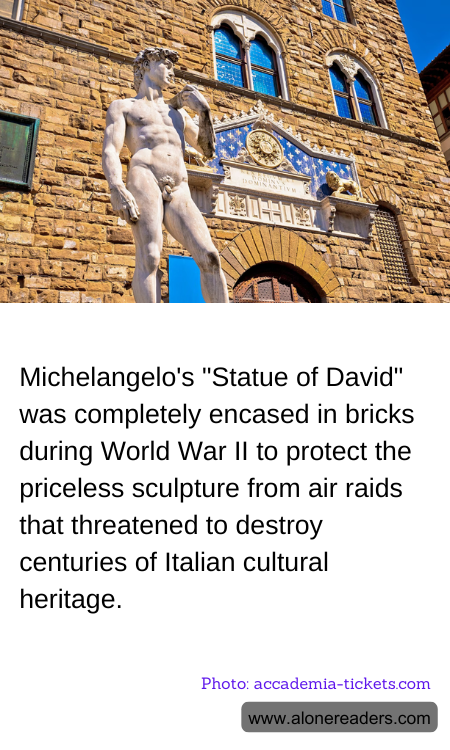
During World War II, the threat to cultural heritage in Europe was immense as bombings and warfare endangered countless historical artifacts and artworks. In Italy, authorities took drastic measures to protect their national treasures. Among these was Michelangelo's iconic "Statue of David," housed in the Galleria dell'Accademia in Florence. Recognized globally as a masterpiece of Renaissance sculpture, the looming threat of air raids prompted Italian officials to go to extraordinary lengths to shield this irreplaceable work.
Michelangelo crafted the Statue of David from a single block of marble between 1501 and 1504. Standing over 17 feet tall, the statue represents the biblical hero David, a favored subject in the art of Florence. By the time World War II broke out, David had already been watching over Florence for more than four centuries, symbolizing the strength and artistic spirit of the city.
The decision to encase the sculpture in bricks was both a literal and symbolic act of preservation. Workers carefully constructed a brick enclosure around the statue, effectively creating a fortress that could withstand shocks and debris from potential bombings. This makeshift shield was intended to absorb and deflect any blasts, ensuring that the marble figure would survive the war unscathed.
Post-war, when the threat had subsided, the brick casing was removed, and to the relief of the art world, the Statue of David emerged unharmed. This act of preservation is a poignant reminder of the lengths to which those in wartime will go to protect their cultural legacy. It underscores the enduring value of art as a symbol of cultural identity and historical continuity, even in the face of devastating conflict. The measures taken to preserve the Statue of David during World War II highlight both the fragility and resilience of cultural artifacts, and they continue to serve as a powerful example of conservation under dire circumstances.