More About This Card
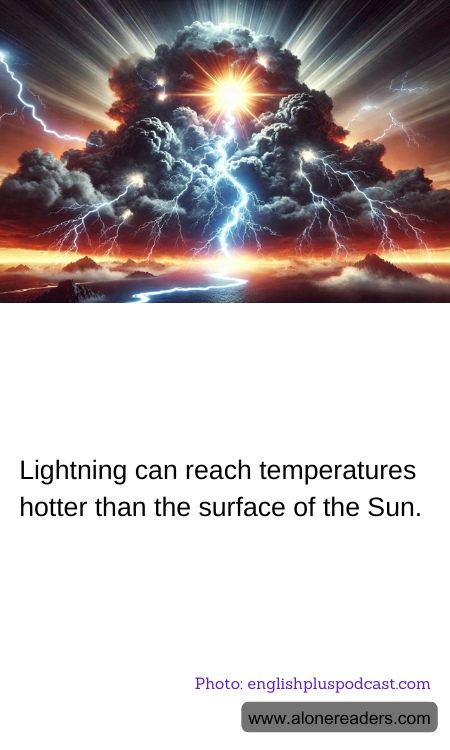
Lightning is one of nature's most powerful and awe-inspiring phenomena. During a storm, when lightning flashes, it briefly outshines the surface of the sun in terms of temperature. A single bolt of lightning can heat the air through which it travels to approximately 20,000 degrees Celsius (about 36,000 degrees Fahrenheit). This is around three times hotter than the surface of the Sun, which stands at about 5,500 degrees Celsius (roughly 10,000 degrees Fahrenheit).
The immense heat produced by lightning is due to the rapid movement of electrical charges, which encounter resistance as they pass through the air. This resistance generates heat, causing the air surrounding the lightning to become superheated, which, in turn, creates the bright flash of light that we see. The rapid expansion of heated air and the subsequent quick cooling as the bolt passes also leads to the thunder we hear following a lightning strike—essentially, the air is rapidly expanding and contracting, creating sound waves.
The high temperatures and potent energy transfers associated with lightning also have significant effects on their immediate environment. For instance, when lightning strikes sand or certain types of soil, the extreme heat can fuse minerals in the soil into glass, forming tubular structures known as fulgurites. Similarly, when lightning strikes a tree, the sap inside can rapidly heat, causing the tree to explode or violently strip away sections of bark.
Despite its extraordinary heat, the duration of exposure when lightning strikes is incredibly brief—lasting only a few microseconds—so it doesn’t have the same long-term heat impact that, say, sunlight has when it warms Earth’s surface. Nonetheless, the dramatic difference in temperature between lightning and the Sun's surface reminds us of the immense forces and energy transitions that occur during a typical thunderstorm, underlining both the beauty and danger of this natural electrical phenomenon.