More About This Card
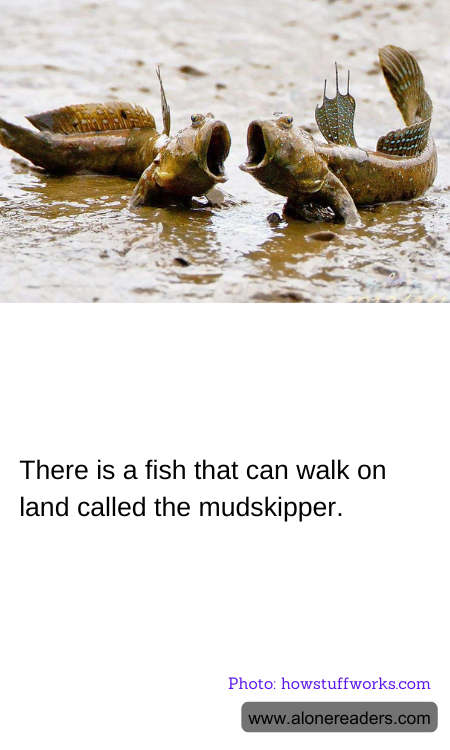
Mudskippers, an intriguing and distinctive group of fishes belonging to the family Gobiidae, are renowned for their ability to walk on land. These remarkable creatures have evolved physiological adaptations that allow them to thrive both in water and on terrestrial environments, predominantly in mangrove swamps, tidal habitats, and muddy shores in the Indo-Pacific and Atlantic regions.
What sets mudskippers apart from other fish is their unique locomotion. They have strong, muscular pectoral fins that not only help them in swimming but also enable them to "walk" and even "jump" on muddy surfaces. This ability is crucial for navigating the complex and changeable environments of mudflats and mangrove ecosystems. On land, mudskippers appear to skip or shuffle forward, activities that give them their name and allow them to hunt, establish territories, or find mates outside the water.
Another fascinating adaptation of mudskippers is their amphibious respiratory system. While they breathe underwater through their gills like typical fish, their gills are smaller and retain moisture, allowing the mudskipper to breathe air through its skin and the lining of its mouth and throat when on land. This adaptation is critical since mudskippers can spend a significant amount of time on mudflats during low tide without returning to the water, thus avoiding aquatic predators and exploiting terrestrial food sources.
In terms of behavior, mudskippers are highly territorial and can often be seen engaging in elaborate displays using their dorsal fins and colorful bodies to communicate with or ward off rivals. Their eyes, set high on their heads, provide a wide field of vision, essential for spotting predators and prey on both land and water. Mudskippers also build and maintain burrows in muddy substrates, which play a vital role in their survival. These burrows, which they dig with their mouths and fins, help in storing air and retaining moisture, providing a refuge from extreme temperatures and high salinity.
Ecologically, mudskippers are vital to the health of their habitats. Their burrowing activities aerate the soil, contributing to the health of mangrove forests, which are among the world's most productive and biologically diverse ecosystems. They also form part of a larger food web, serving as prey for birds, larger fish, and other predators, while feeding on small crabs, insects, and worms.
Mudskippers, therefore, present a remarkable case of evolutionary adaptation and survival, straddling the worlds of sea and land with extraordinary aplomb. Their existence challenges the conventional understanding of fish as strictly aquatic creatures and underscores the complex interrelations within ecosystems and the incredible diversity of life forms adapting to niche habitats.