More About This Card
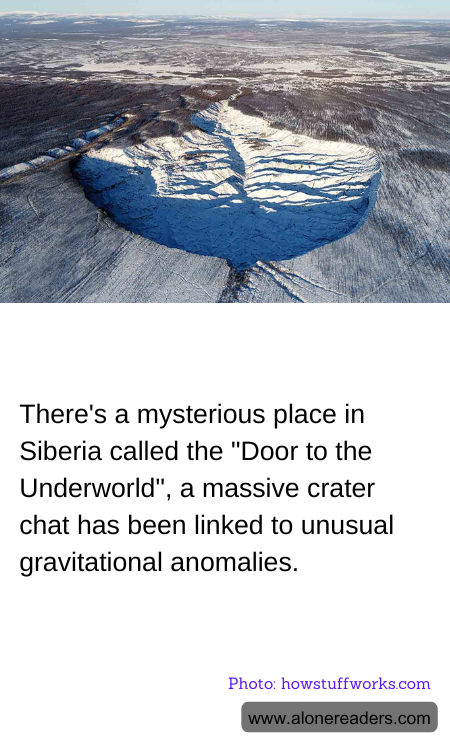
In the remote expanses of Siberia lies a geological phenomenon that has captivated both scientists and the imagination of the public: the "Door to the Underworld." Officially known as the Batagaika Crater, this site is a gigantic depression in the earth that continues to expand each year. Formed by a process called thermokarst, the crater began to form in the 1960s after a swath of forest was cleared, causing the previously frozen ground—known as permafrost—to thaw and slump dramatically.
The crater is currently over half a mile long and more than 280 feet deep, revealing layers of earth and sediment that are believed to be up to 200,000 years old. This natural time capsule offers an unprecedented peek into the climatic conditions of past millennia, potentially aiding scientists in understanding both historical and future climate change. The site's continuous expansion is fueled by the ongoing thaw of permafrost, a consequence of global warming, shedding light on the environmental changes occurring in Arctic regions.
Apart from its scientific value, the Batagaika Crater has been shrouded in local myths and intrigue, owing partly to its colloquial title as the "Door to the Underworld." This name taps into native folklore and views about the site being a passage to another world. Adding to the mystery are reported gravitational anomalies in the area, which have sparked a slew of speculative theories ranging from underground gas releases to more fantastical notions of magnetic fields and unknown energies.
Though these gravitational anomalies are often subjects of popular speculation, scientific studies suggest they could be attributed to the massive loss of mass from the melting permafrost and subsequent geological reconfigurations. Such shifts might affect local gravitational measurements, though concrete evidence remains scant, and research continues.
The "Door to the Underworld" not only offers a stark visual of climate change's impact but also serves as a reminder of the Earth's dynamic nature and the transient stability of what we often take for granted as solid ground. As it expands, this Siberian crater will continue to be an object of scientific scrutiny and a symbol of intriguing natural wonders that pepper our planet.