More About This Card
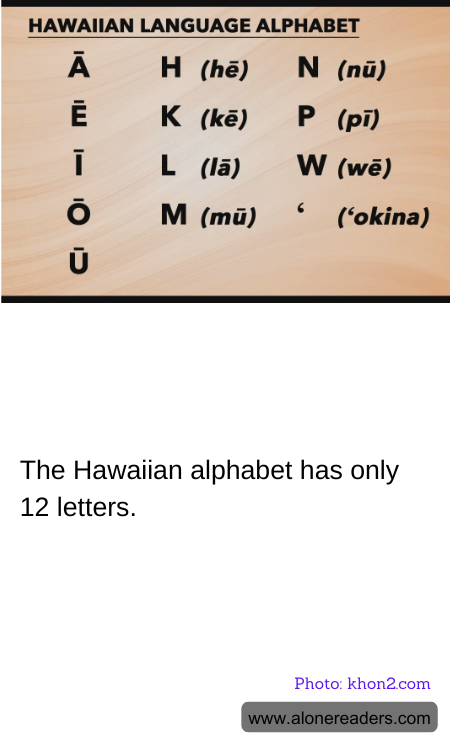
The Hawaiian alphabet, known as Ka Pi‘apa Hawai‘i, is unique in its simplicity and efficiency. Comprising only 12 letters, it includes five vowels—A, E, I, O, U—and seven consonants—H, K, L, M, N, P, W. Additionally, the ‘okina, a glottal stop marked by an inverted apostrophe, plays a critical role in the pronunciation and meaning of Hawaiian words, effectively acting as a consonant.
The development of the Hawaiian alphabet was closely tied to the efforts of 19th-century missionaries who wanted to transcribe the Hawaiian language to facilitate literacy and the spread of Christianity. Before their arrival, Hawaiian was purely a spoken language. The missionaries' work on the language led to the publication of the first Hawaiian Bible, which had a profound influence on literacy levels among Hawaiians during that period.
The simplicity of the Hawaiian alphabet makes it particularly interesting from a linguistic standpoint. With only a few letters, Hawaiian can express a vast array of concepts, emotions, and descriptions. This economy of letters results in a number of digraphs (combinations of two letters) and diphthongs (combinations of two vowels in a single syllable), which enrich the language and allow for its fluid, melodic quality.
Moreover, the Hawaiian language's structure and vocabulary convey not just information but a deeper connection to the Hawaiian environment and culture. Words often have multiple meanings enriched by context and nuance, reflecting the deeply embedded nature of language in Hawaiian daily life and traditions. For example, the word “aloha” is used to greet someone or say goodbye, but it also conveys love, compassion, mercy, and a sense of peace—embodying the spirit of the Hawaiian culture in a single term.
Today, there is a resurgence of interest in the Hawaiian language, driven by cultural preservation initiatives and educational programs aimed at revitalizing the language among younger generations of Hawaiians. Schools across Hawaii now offer courses in Hawaiian, and there are immersive preschools dedicated to teaching children the language from a young age. This cultural revival is pivotal as the language is not just a means of communication but a vessel for carrying forward the rich heritage of the Hawaiian people. Through these efforts, the Hawaiian alphabet continues to be a foundational element of the Hawaiian identity, connecting past, present, and future.