More About This Card
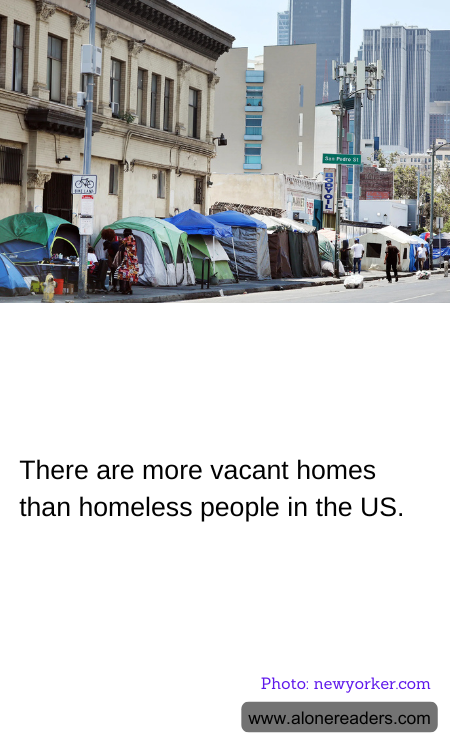
In the United States, the paradox of having more vacant homes than homeless people highlights significant inefficiencies and social issues within the housing market and broader socio-economic framework. As of recent statistics, America has an estimated number of over half a million homeless individuals, yet the number of vacant homes significantly exceeds this, ballooning into the millions. These vacant homes come in various forms, including holiday homes not used year-round, properties held by investors for speculative purposes, and homes that are unoccupied due to foreclosure or pending sale.
The juxtaposition of high vacancy rates alongside persistent homelessness suggests a fracture in the housing policy that fails to bridge the gap between available housing stock and housing needs. The reasons for these vacancies are multifaceted. Economically, the high cost of housing in many parts of the U.S. makes affordability a substantial barrier. Social factors, such as stringent tenant screening criteria and a lack of supportive housing for those with disabilities or chronic illnesses, further exacerbate the issue. Additionally, geographic mismatches between where jobs are located and where affordable housing exists can make it difficult for people to find housing near employment opportunities.
Addressing this mismatch requires multifaceted policies. Some cities have begun to implement measures such as taxing empty homes to encourage owners to either sell or rent out vacant properties. Other potential solutions include converting vacant properties into affordable housing units, strengthening tenant protections to prevent excessive evictions, and expanding federal housing voucher programs to assist low-income families in affording rent. Comprehensive support services are also critical, as many homeless individuals and families also need access to healthcare, addiction services, and job training programs to help stabilize their situations.
The presence of more vacant homes than homeless persons ultimately calls for innovative housing policies and a coordinated effort between government agencies, non-profits, and private sectors. Optimizing the use of existing buildings, reconsidering housing development incentives, and ensuring equitable growth can help in mitigating this incongruity and aim toward eliminating homelessness in America.