More About This Card
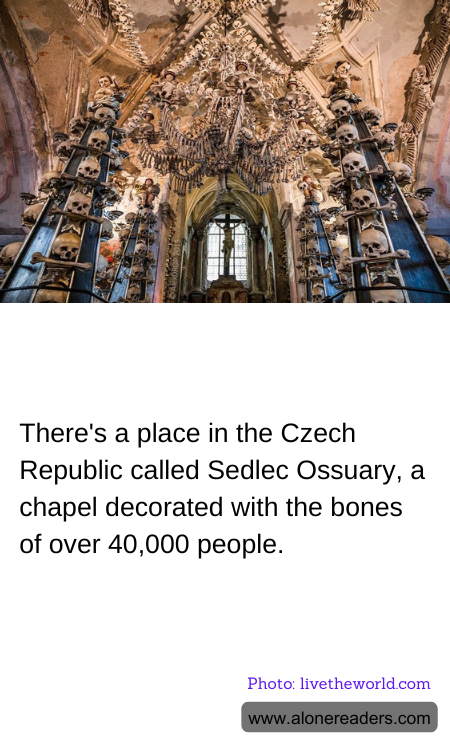
Nestled in the small town of Kutná Hora in the Czech Republic, the Sedlec Ossuary stands as an eerie yet profound testament to human history and artistic expression. Often referred to as the "Bone Church," this small Roman Catholic chapel is adorned with the skeletal remains of an estimated 40,000 to 70,000 people, whose bones have been artistically arranged to form decorations and furnishings for the chapel.
The origins of Sedlec Ossuary date back to the 13th century when the abbot of the Sedlec monastery was sent to the Holy Land and returned with a small amount of earth he had sprinkled around the abbey cemetery. The site thus became a coveted burial spot in Central Europe. During the Black Death in the mid-14th century and the Hussite wars in the early 15th century, the number of burials outgrew the space, and the older skeletons were exhumed to make room for new burials. These exhumed bones were stored in the chapel and later arranged into decorations.
The task of arranging the bones in a decorative manner was given to a woodcarver named František Rint in the 1870s. Rint bleached the bones for a uniform appearance and crafted them into chandeliers, pinnacles, and even a coat of arms. The centerpiece of the chapel is an enormous chandelier containing at least one of every human bone, an astonishing example of Rint's handiwork, and macabre creativity.
Visiting Sedlec Ossuary offers a unique and somber experience. This chapel serves not only as a grim reminder of the inevitable fate that awaits us all but also as a celebration of life and a memorial to those long gone. The artistic arrangement of human bones evokes a range of emotions, from awe to introspection about the transient nature of human existence.
Despite its dark allure, the ossuary is an active place of worship and a poignant historical monument. This chapel continues to attract thousands of tourists each year, drawn by its murky history and unique decor, making it one of the most fascinating and unusual cultural attractions in the Czech Republic.