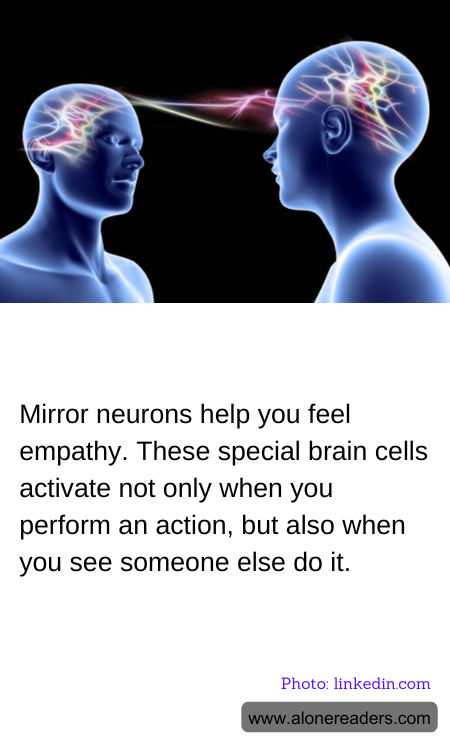
Mirror neurons are a fascinating and crucial part of our brains, particularly when it comes to understanding the actions and emotions of others. Discovered accidentally in the 1990s during experiments on macaque monkeys, researchers found that certain cells in the brain activated both when the monkey performed a task and when it observed the same task being performed by another. Later research suggested that humans have similar neurons, indicating that these cells could be foundational in the development of social behaviors.
This remarkable neurological discovery highlights how deeply interconnected we are in both physical and emotional realms. When you watch someone experiencing joy, sadness, or pain, mirror neurons can cause you to internally echo those feelings, providing a neural basis for empathy. This doesn't just help us share emotions; it also aids in learning through imitation, which is a powerful tool in human development—from acquiring language as a child to mastering a sport or art.
Empathy, facilitated by mirror neurons, allows us to navigate our social environment by giving us insight into the minds of others, not through direct communication, but through an instinctive, emotional connection. This capability is crucial for building relationships and functioning within societal constructs. Without this ability, social interactions would be far more mechanical and less nuanced.
The study of mirror neurons continues to be a rich field of inquiry, potentially offering insights into various psychological conditions, including autism spectrum disorders, schizophrenia, and other disorders where empathy and social awareness are affected. Understanding how these neurons operate not only deepens our understanding of basic human interactions but also opens pathways to therapeutic approaches that could enhance or rehabilitate social cognition in those with impairments in these areas.
In essence, mirror neurons not only reveal the intricate biochemistry of our brains but also the profound truth about human connection: we are wired to understand, mimic, and feel with each other, creating a silent dance of empathy that is fundamental to the human experience.
