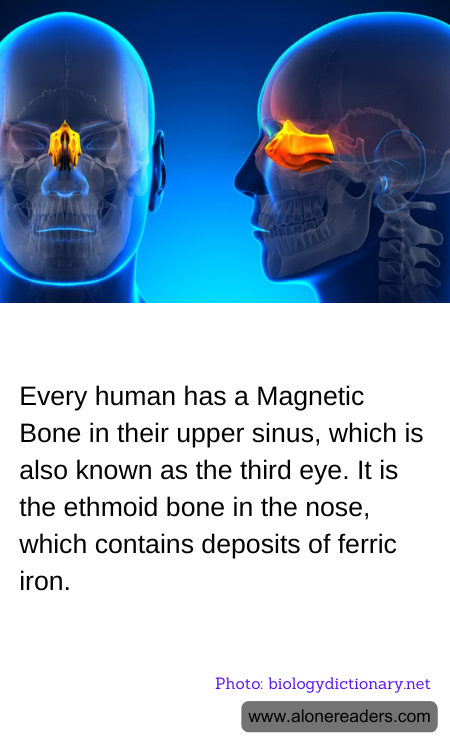
The concept of a "magnetic bone" in the human body, particularly referred to as located in the upper sinus, often captures the imagination and interest due to its mystical implications and connections to the "third eye." Scientifically, the closest anatomical structure corresponding to this description is the ethmoid bone, a delicate and spongy bone situated between the eyes at the nasal cavity's roof. This bone plays a crucial role in the structural integrity of the face and helps separate the nasal cavity from the brain, as well as provides an anchor for the nasal cartilage.
The ethmoid bone does contain trace amounts of metals, as do other bones in the body, primarily calcium, but has been observed to have deposits of ferric iron. These iron deposits, however, are not unique in being magnetically responsive in a way that significantly influences human orientation or perception like the magnetoreception observed in some animals. In birds, for example, iron-rich cells in their beaks help in navigation by detecting Earth’s magnetic field—a phenomena that has not been substantively observed in humans.
The idea of the ethmoid bone being associated with the third eye is intriguing, fostering rich ground for spiritual and metaphysical speculation. In many Eastern traditions, the third eye is considered a metaphorical concept located at the forehead between the eyebrows, associated with enlightenment and a higher state of consciousness. This is largely a spiritual or esoteric belief, which links physical aspects of the body with spiritual or mystical capabilities.
Scientific research into such topics is limited, and much of the knowledge around how metals like iron influence the human body is directed towards understanding their biochemical roles and health implications rather than any magnetic sensory capabilities. What can be confirmed is that the ethmoid bone, containing ferric iron, does not functionally equate to a magnetic sensory organ in any manner similar to that found in certain animal species. It is essential, however, to respect and explore these beliefs, understanding their cultural and historical significances, and how they intersect with our growing scientific understanding.
