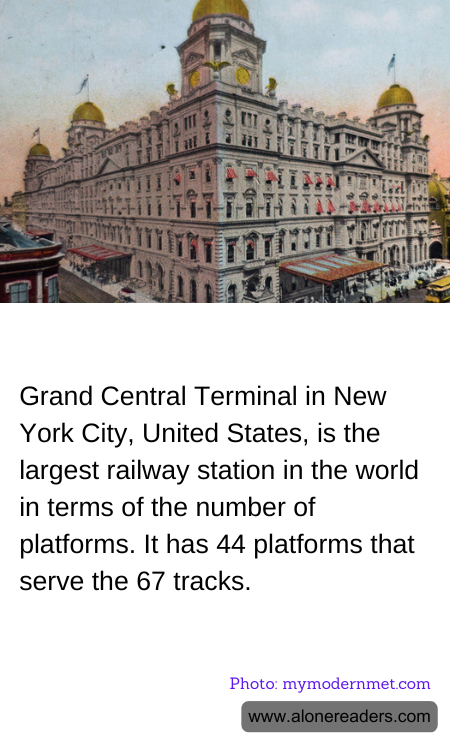
Grand Central Terminal, located in the bustling heart of New York City, is not just a vital transport hub but also a historical and architectural marvel. Known as the largest railway station in the world by the number of platforms, it houses an impressive 44 platforms on two different levels with 67 tracks along them. Each day, the terminal witnesses thousands of commuters and tourists who come to marvel at its grandeur or catch a train to their next destination.
The terminal’s construction was a feat of early 20th-century engineering, designed to handle the heavy traffic of urban commuters. Officially opening in 1913, Grand Central was built during a time when long-distance train travel was the most luxurious mode of transportation in the United States. Its design reflects the elegance and grandiosity of that era, with Beaux-Arts architecture manifesting in vast spaces and intricate details. The main concourse, often bustling with activity, is crowned by an elaborately painted celestial ceiling, depicting the Mediterranean sky with golden constellations.
Beyond its function as a transit station, Grand Central Terminal has become a cultural icon, featured in numerous films and television shows, symbolizing the never-sleeping nature of New York City. The terminal also offers a variety of dining and shopping options, ranging from quick bites to fine dining establishments like the famous Oyster Bar, and upscale retail stores. As a result, it's a place where commuters, shoppers, and diners coalesce, contributing to the vibrant atmosphere unique to New York City.
Moreover, Grand Central Terminal is not just about hustle and transport; it serves as a social and cultural gathering place. It hosts public events, including the annual Christmas market and seasonal displays that add to its appeal as a public space. Its rich history is preserved and shared through guided tours that delve into the architectural and operational nuances of the terminal, intriguing both locals and tourists alike.
In conclusion, Grand Central Terminal remains a testament to the ingenuity and ambition of early 20th-century America, functioning as a vital artery in the city’s transport system while continuing to enamour visitors with its historical and architectural significance. Its continued popularity underscores its role not just as a station, but as a beloved landmark of New York City.
