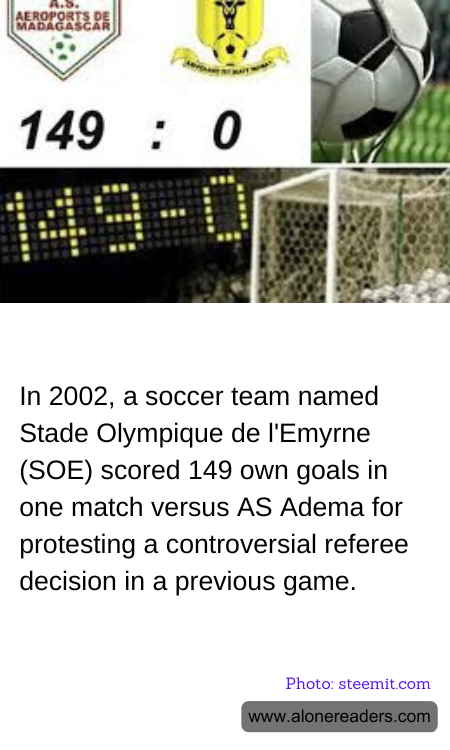
In one of the most bizarre sporting events in history, the Madagascan football team Stade Olympique de l'Emyrne (SOE) deliberately scored 149 own goals during a match against AS Adema on October 31, 2002. This unprecedented scenario unfolded as a protest against what SOE perceived as unfair officiating in their previous match.
The match was part of a four-team playoff tournament to determine the national champion in Madagascar's top football league. Days before this infamous game, SOE, which had won the league the previous year, felt they were wronged by a referee decision that resulted in a loss to AS Adema. Their frustration and sense of injustice over this call culminated in the decision to use their next game as a stage for protest.
From the kickoff, SOE players began systematically passing the ball back to their own net, bewildering spectators. Each time the game restarted, they would immediately concede another own goal, surrendering their chances in the most overt way possible. By the end of the match, the scoreline read an astonishing 149-0 in favor of AS Adema, marking the highest scoring game in the history of professional football.
The fallout from this protest was significant. The football authorities in Madagascar were embarrassed on an international stage and moved quickly to address the situation. Several players and the coach of SOE were suspended, and the team itself faced other sanctions. This match not only reshaped the regulatory landscape of sportsmanship in Madagascar but also sparked a global dialogue on how sports organizations handle disputes and the pressures placed on athletes.
While intended as a statement against perceived injustice, the actions of SOE in this match left a controversial mark on the world of sports, demonstrating the dramatic lengths to which some will go to express dissatisfaction with the rulings of game officials. This incident remains a stark example of protest in sports, highlighting the long-lasting impact of referee decisions and the complex interplay between sportsmanship and advocacy.
