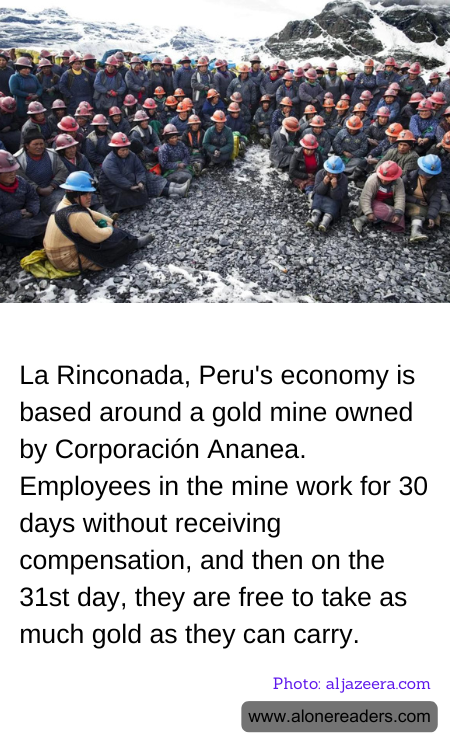
La Rinconada, Peru, stands as a unique example of an extreme high-altitude human settlement, primarily driven by the presence of gold mines. At an elevation of over 5,000 meters, it is not only one of the highest cities in the world but also one characterized by an informal economy centered around gold extraction. The main economic activity here revolves around the gold mine owned by Corporación Ananea, which operates under a distinctive system known as the "cachorreo."
Under the cachorreo system, mine employees work under exceptionally harsh conditions for 30 continuous days without direct financial compensation. On the thirty-first day, however, these workers are allowed to enter the mine and extract as much ore as they can carry. The value of gold within this ore serves as their sole remuneration for the entire month’s labor. This practice underscores a form of gamble; the more gold-rich the ore an individual can carry, the better they are compensated. However, it is heavily dependent on luck and physical strength, often resulting in significant disparities in income among the miners.
The economy in La Rinconada is therefore precarious and heavily dependent on fluctuating gold prices. There is little by way of formal economic structures or alternative employment opportunities, which makes the local population vulnerable to economic shocks. This system also presents severe environmental and health impacts. The use of mercury in gold processing, common in such informal mining setups, poses serious health risks to the workers and results in significant environmental degradation. Moreover, living conditions in La Rinconada are extremely challenging due to its remote location, lack of infrastructure, and basic services which impact the overall quality of life.
Indeed, while the allure of gold attracts thousands in search of fortune, the reality is a hard, often dangerous lifestyle with no guarantee of a steady or substantial income. The cachorreo system, while providing immediate access to potential wealth in a single day, does not offer the stability or security of regular pay, making economic resilience hard to build in this high Andean town. Thus, while it forms the backbone of La Rinconada’s local economy, it also underscores the broader challenges of reliance on extractive industries and the need for sustainable developmental approaches.
