During World War II, the South Pacific was one of many critical theaters where the Allied forces engaged extensively with the Japanese. The nature of combat in this region, particularly for infantrymen, was sporadic due to the geographical challenges and the tactical necessity of maneuvering across numerous islands. This led to intermittent, though often intense, periods of combat. On average, an infantryman in this region experienced approximately 8 days of combat within a year. This relatively low figure can be partly attributed to the logistical complexities and the time-consuming process of planning and executing amphibious operations over a vast area characterized by dense jungles, mountains, and widespread islands.
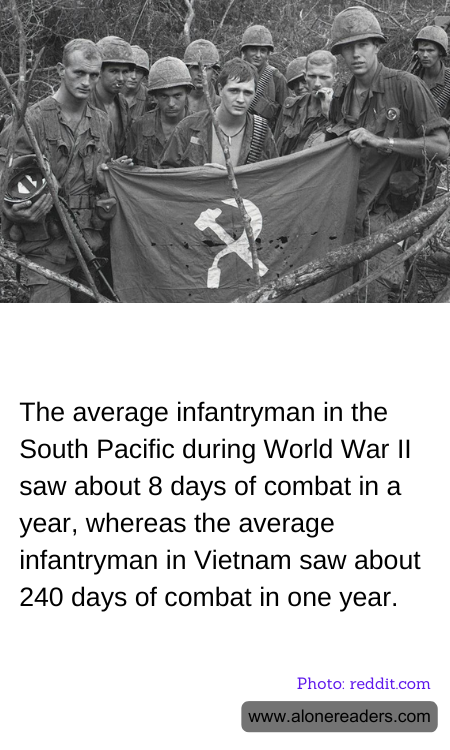
Contrastingly, the Vietnam War presented a very different scenario. The conflict was significantly different from the island hopping campaigns of World War II. In Vietnam, guerrilla warfare predominated, with the Viet Cong employing hit-and-run tactics against U.S. and Allied forces. The dense jungle environment and the North Vietnamese Army's use of the Ho Chi Minh Trail for moving troops and supplies allowed for persistent and prolonged engagements. Consequently, the average infantryman in Vietnam saw about 240 days of combat in a year, a stark increase from the experience of their World War II counterparts. This high figure reflects the continuous nature of the Vietnam War, where contact with the enemy was more frequent and re-engagements were common due to the enemy's guerrilla tactics and the strategic importance of controlling major territories throughout the war’s duration.
This striking difference in the days of combat seen by infantrymen in these two conflicts illustrates the evolution of warfare and operational environments. The dense jungles and the political complexities of Vietnam created an enduring and almost constant state of combat, unlike the engineering feats and tactical battles characterizing the island-hopping campaigns in the South Pacific during World War II. These differences not only influenced military tactics and strategies but also had profound effects on the soldiers' experiences and the psychological impacts of their service in these distinct conflicts.
