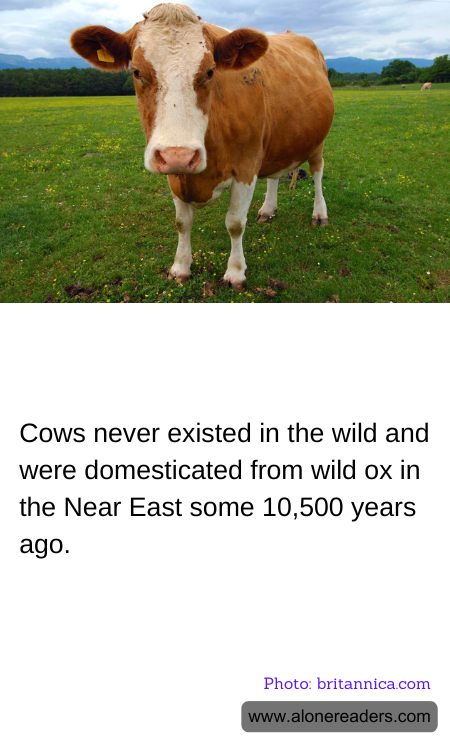
The history of domestic cows stretches back approximately 10,500 years when their wild ancestors, known as aurochs, roamed across the grasslands of the Near East and other parts of Eurasia. The aurochs were formidable creatures, significantly larger and more aggressive than the domesticated cattle we are familiar with today. Gradually, these wild oxen were tamed by ancient human societies, a crucial development that coincided with the shift from nomadic lifestyles to more settled farming communities.
The domestication of the auroch was primarily motivated by the human need for a stable supply of meat, milk, and hides, and over time, the utility of these animals expanded to include labor in fields and transportation. Genetic studies indicate a complex pattern of domestication, with multiple instances of taming wild oxen at different times and locations across the Near East. This process entailed selective breeding practices that emphasized docility, size, and productivity, leading to the diverse varieties of domestic cattle observed globally today.
This transformative relationship between humans and cattle played a fundamental role in the development of civilization. The ability to rely on cattle for critical agricultural and economic needs enabled communities to flourish and expand, laying the foundational economic practices for trade and sustenance in many early cultures. As such, the domestication of cows from their wild counterparts represents not just a biological achievement, but also a pivotal cultural and societal advancement, marking a significant epoch in human history. Today, cows are integral to agricultural economies around the world, underscoring the lasting impact of their domestication from the wild aurochs of the Near East.
