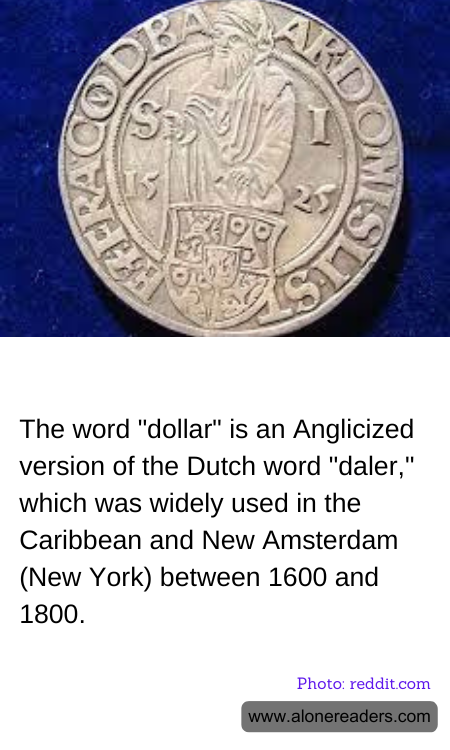
The origin of the word "dollar" traces back to European coinage, specifically deriving from the Dutch "daler." This reflects a period when Dutch influence was significant due to extensive trade and settlements, especially in regions like the Caribbean and what is now known as New York, originally New Amsterdam. Between 1600 and 1800, these areas were pivotal points of trade and cultural exchange where the Dutch, among other European powers, were establishing economic dominance.
The "daler" itself is coupled to earlier forms of currency like the Joachimsthaler, named after the valley of Joachimsthal where silver was mined in Bohemia (now part of the Czech Republic). Coins minted from this silver came to be called "thalers," which morphed linguistically into "daler" as it spread through various regions and languages. When the British and other European settlers came to America, they brought with them the concept of the "daler," which was easier for the English speakers to pronounce as "dollar."
The adaptation from "daler" to "dollar" was not just a change in name but also signified the beginning of a standardized medium of exchange that would later define the economic framework of the burgeoning United States. The establishment of the U.S. dollar as the country’s standard unit of money was ratified by the Coinage Act of 1792, setting the stage for the dollar's role in global economics. This evolution from a Dutch term used by traders and settlers reflects not only the linguistic influences but also the socio-economic transformations during those centuries of exploration, colonization, and cultural exchanges. Thus, the story of the dollar is not merely about economic history; it symbolizes the intertwined human experiences across continents and cultures.
