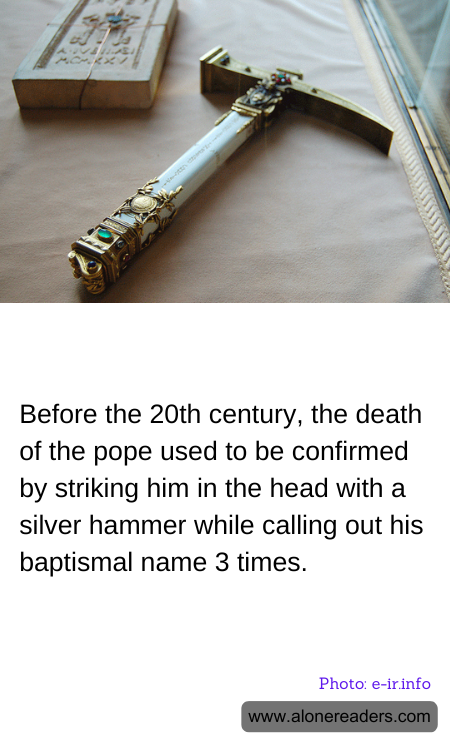
The death of a pope involves various rituals, steeped in tradition and history. One of the lesser-known and somewhat misunderstood customs was the ceremonial act of confirming the pope's death. According to historical accounts, this was traditionally done by the papal chamberlain, also known as the Camerlengo, who performed a ritual to officially confirm the pontiff's demise. This ritual reportedly involved tapping the deceased pope on the forehead with a small ceremonial silver hammer. Alongside this action, the Camerlengo would call out the pope's baptismal name three times to ensure that he did not respond, thereby confirming his passing.
The use of the silver hammer was symbolic, echoing the responsibilities and authority of the pope during his lifetime. It was not intended as a violent act but as a ritualistic confirmation, representative of the transition of papal duties and the serious acknowledgment of the pope's death. The actual practice of this ritual, however, is surrounded by myths and has variously been exaggerated or misinterpreted over time. Some interpretations suggest a more dramatic scene, but historical evidence points to a more solemn and respectful procedure.
While this specific ritual of using the silver hammer has largely become obsolete, the process of confirming a pope's death remains deeply ceremonial. Today, the death of a pope is followed by a series of procedures that include medical confirmation, formal announcements, and the sealing of the papal apartments. These procedures reflect both respect for the deceased and the practical necessities of transitioning the leadership of the Roman Catholic Church.
The transition from the medieval practices to modern procedures underscores the evolution of the papacy and its rituals, adapting to contemporary sensibilities and the administrative needs of the Church while retaining the solemnity of the office. Such changes highlight the balance between tradition and adaptation within one of the world's oldest religious institutions.
