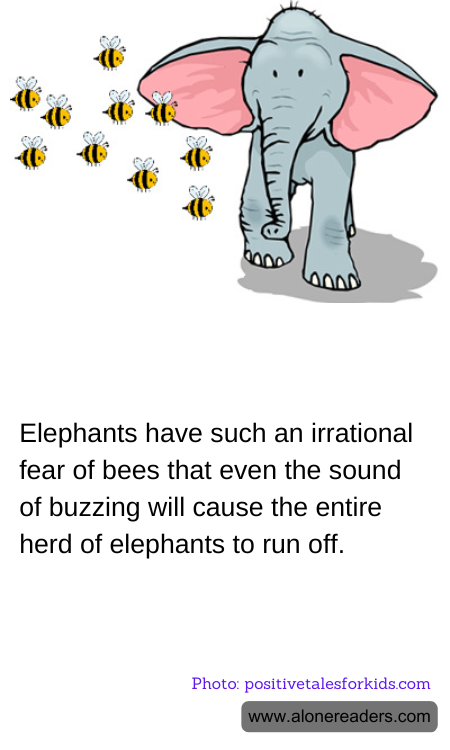
Elephants, despite their massive size and formidable presence in the animal kingdom, exhibit a surprising and seemingly irrational fear of bees. This fear is so profound that even the mere sound of buzzing can trigger a hasty retreat by a whole herd. This phenomenon has been observed and studied extensively, and it has significant implications for both elephant conservation and agriculture.
The relationship between elephants and bees is so pronounced that researchers have used this fear to help protect farmers’ crops from being trampled. In regions where elephants are common, farmers suffer significant losses when these giant animals raid their fields. By strategically placing beehives around the perimeter of fields, farmers can create natural deterrents. The elephants, wary of the bees and the potential of being stung, tend to avoid areas where they hear buzzing.
The science behind this fear is rooted in the elephants’ acute awareness and sensitivity. Elephants have relatively thin skin that bees can penetrate, especially around their eyes, mouth, and inside their trunks. A bee sting is painful and can cause considerable distress to an elephant. Moreover, African bees, which are more aggressive than their European counterparts, can swarm and sting in groups, which increases the risk and potential harm to the elephants.
Conservationists have harnessed this fear in more proactive ways. For example, the use of "beehive fences" has become a popular method to gently deter elephants from entering human-populated areas or farms without needing to resort to harmful measures. This not only protects the livelihood of the farmers but also contributes to the preservation of elephant populations, as it reduces human-elephant conflicts and the subsequent retaliation against elephants that might involve injury or death.
Additionally, the elephants’ fear of bees has influenced research in understanding elephant behavior and communication. Elephants are known to emit a specific low-frequency rumble as a warning when bees are near, which alerts other members of the herd to the danger. The ability of elephants to communicate about specific threats and coordinate a group response is a fascinating aspect of their social structure and intelligence.
Thus, while it may seem irrational at first, the fear of bees among elephants is a poignant example of how even the mightiest creatures have vulnerabilities. It also highlights the interconnectedness of different species within an ecosystem and how understanding these relationships can lead to innovative conservation strategies that benefit both wildlife and humans.
