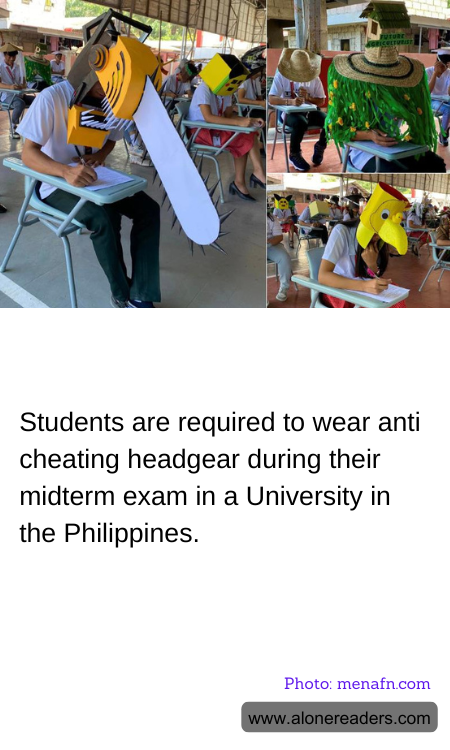
In a unique approach to curbing academic dishonesty, a university in the Philippines has implemented a new rule requiring students to wear anti-cheating headgear during their midterm exams. This unconventional measure aims to prevent students from glancing at their peers' papers or using unauthorized electronic devices during exams. The headgear, which has been met with mixed reactions, is designed to limit the peripheral vision of the wearer, essentially keeping students' eyes focused on their own work.
The introduction of the anti-cheating headgear is part of a broader initiative to ensure fairness and integrity in the examination process. University officials argue that this measure is necessary to maintain a high standard of academic honesty and to protect the value of the institution's degrees. They believe that technological advancements and innovative cheating methods require equally innovative countermeasures.
However, the decision has sparked a debate among students and educators alike. Some students feel that the headgear is uncomfortable and adds unnecessary stress to the already pressuring exam environment. There are also concerns about the potential for the headgear to cause anxiety or claustrophobia among test-takers. Critics argue that such measures might reflect a lack of trust in the student body and could foster a negative atmosphere centered around surveillance and suspicion.
On the other hand, some educators support the move, suggesting that it could indeed level the playing field by preventing cheating. They argue that traditional methods of monitoring exams, such as increased invigilation, have not been entirely effective at deterring dishonest behaviors. By directly controlling what students can see during an exam, the university hopes to minimize the chances of cheating.
The implementation of this anti-cheating headgear is reflective of broader trends in academic institutions worldwide to leverage technology and innovative solutions to academic integrity challenges. Whether this particular approach will prove effective or popular remains to be seen, and it is likely that the university will need to closely monitor the outcomes and student feedback to make informed decisions about the future use of such devices in examinations.
