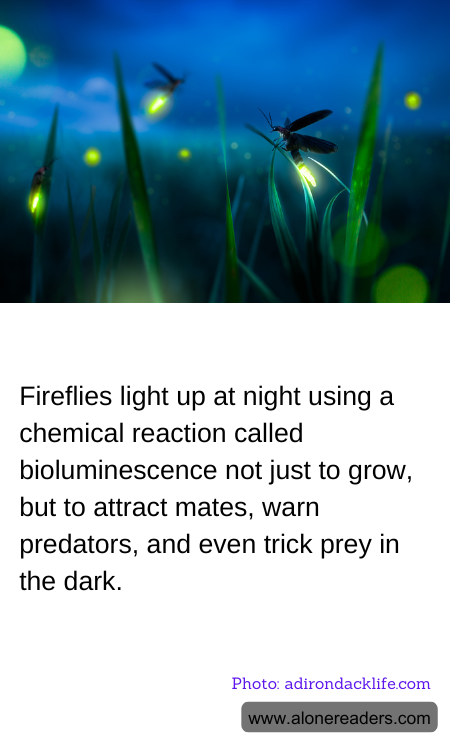
Fireflies, also known as lightning bugs, are among the most charming insects we encounter on warm summer nights. Their ability to light up the darkness with flickering patterns is not just a delightful natural spectacle but also a critical survival tool. This phenomenon, known as bioluminescence, results from a chemical reaction that involves luciferin (a light-emitting compound), luciferase (the enzyme that catalyzes the reaction), ATP (an energy molecule), and oxygen.
The purpose behind this light show is multifaceted. Primarily, fireflies use bioluminescence to attract mates. Each species of firefly has a distinct pattern of light flashes, which aids in distinguishing potential partners of the same species in the dark. This is crucial to their reproductive success. Male fireflies typically fly around emitting patterns of flashes, while females, often perched on the ground or on foliage, respond with their own specific flash pattern to signal their availability and location.
However, the uses of their bioluminescent capabilities extend beyond mating rituals. Fireflies also employ bioluminescence as a defense mechanism to ward off predators. The light they produce is a warning of their unpalatability. Many species of fireflies contain toxic chemicals, and their light serves as a reminder to predators about their bitter taste and potentially toxic nature. This form of communication in the animal kingdom, where an animal signals its toxic or unpalatable nature through bright and distinct colors or, in this case, light, is known as aposematism.
Interestingly, some fireflies use their light for more deceptive purposes to secure a meal. Certain species mimic the mating flashes of other species to lure unsuspecting males. When the male approaches thinking he’s found a mate, he instead finds a predator, using the light as a tool of predation rather than attraction.
Bioluminescence in fireflies is not only a remarkable natural phenomenon but also an intriguing subject of study that provides insights into evolutionary biology, ecology, and even the development of new scientific tools and technologies. For instance, researchers have utilized the genes responsible for light production in fireflies to create luminescent markers in gene studies, allowing for the tracking of biological processes in real time. Thus, the enchanting lights of fireflies illuminate not only our summer evenings but also the pathways of scientific discovery, uncovering the complexities of nature and enhancing our understanding of the biological world.
