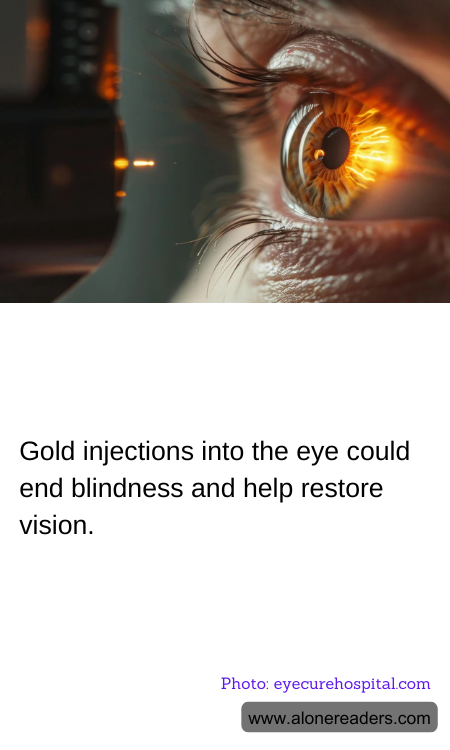
Gold has long been revered not just for its aesthetic value but also for its medical applications, stretching back to ancient times. Recently, researchers have uncovered a potentially groundbreaking therapeutic use for gold in treating blindness. By injecting tiny amounts of gold into the eye, scientists are exploring the possibility of restoring vision or preventing further vision loss. This cutting-edge technique primarily focuses on the use of gold nanoparticles, which can be precisely controlled and directed once inside the eye.
This innovative approach leverages the unique properties of gold nanoparticles, including their ability to facilitate the repair and regeneration of damaged retinal cells. The retina, located at the back of the eye, is crucial for vision as it receives light and converts it into neural signals that the brain can interpret. Damage to this area is a common pathway to blindness in conditions such as macular degeneration and retinitis pigmentosa. The hypothesis is that gold nanoparticles can help regenerate the photoreceptors or protect them from further damage, thereby either restoring or preserving vision.
The mechanism behind this involves the nanoparticles’ interaction with various biological structures within the eye. Due to their small size and conductive nature, gold nanoparticles can improve cellular interactions that are vital for the healing and functioning of retinal cells. They can also be used to administer drugs directly to the retina, enhancing the effectiveness and reducing the side effects of treatments currently in use.
Several preliminary studies have shown encouraging results where visual function was either partially restored or decline in vision was slowed down substantially in models of degenerative eye diseases. Importantly, these studies also suggest that the use of gold in such minute quantities is safe and well-tolerated by the eye, reducing the risk of adverse effects commonly associated with long-term treatments.
Yet, while the initial results are promising, this technology is still in its infancy, requiring further research and extensive clinical trials to fully understand its potential and limitations. Issues such as the optimal size and concentration of nanoparticles, their long-term impact on eye health, and the feasibility of routine implementation in clinical settings need comprehensive investigation.
In conclusion, the use of gold injections to treat eye conditions and potentially restore vision represents an exciting frontier in medical science. It melds ancient knowledge with modern technology, offering hope to millions suffering from vision impairment. If proven effective, this could mark a significant advancement in ophthalmology, providing a new lease on sight to those who currently have few viable treatment options.
