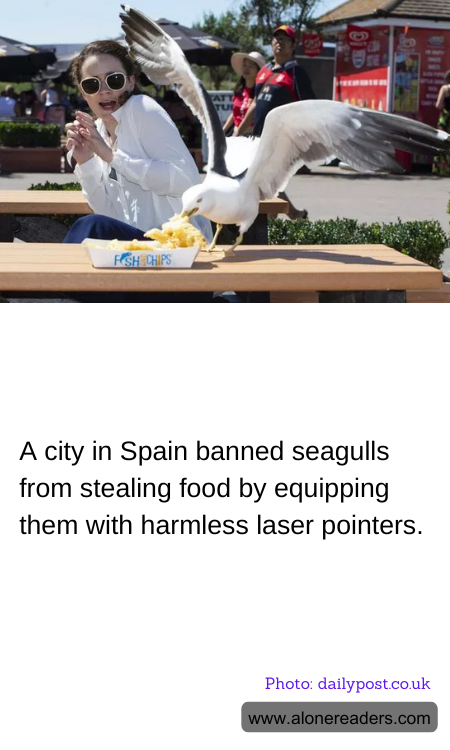
In a bold and inventive move, a city in Spain has started equipping seagulls with harmless laser pointers to prevent them from stealing food from residents and tourists. The initiative was launched after numerous complaints from both locals and visitors about the aggressive behavior of seagulls, which often swoop down to snatch food right from their hands. This innovative solution aims to deter seagulls in a non-invasive way that causes no harm to the birds or the environment.
The mechanism behind the strategy involves attaching small, lightweight laser devices to the seagulls. These lasers are designed to emit a harmless, low-level light beam that is enough to startle the birds but not cause any physical harm. The idea is that the sudden appearance of the laser light confuses and disorients the seagulls, making them less likely to approach people for food. The lasers are set to activate only during specific conditions, such as when the birds are flying in areas frequented by people.
The city's environmental department consulted with ornithologists and wildlife experts to ensure the safety and effectiveness of this method. According to experts, this approach could be a more humane alternative to other deterrent methods such as netting or using noise devices, which can cause stress and injury to birds. Moreover, this method aligns with animal welfare standards and focuses on modifying behavior rather than punishing the animals.
As the program rolls out, city officials are closely monitoring the impact of the laser-equipped seagulls on local wildlife and human populations. Early reports suggest a noticeable decrease in food-stealing incidents in areas where the program has been implemented. Additionally, tourists have expressed relief and amusement at the innovative approach, which has also garnered media attention.
However, some concerns remain regarding long-term implications for the birds' natural behavior and the potential for habituation to the lasers. Researchers involved in the project are studying these aspects closely, aiming to balance human convenience with ecological and animal well-being. If successful, this novel approach could set a precedent for other cities facing similar challenges with wildlife, demonstrating that coexistence can be achieved through creative and compassionate problem-solving.
