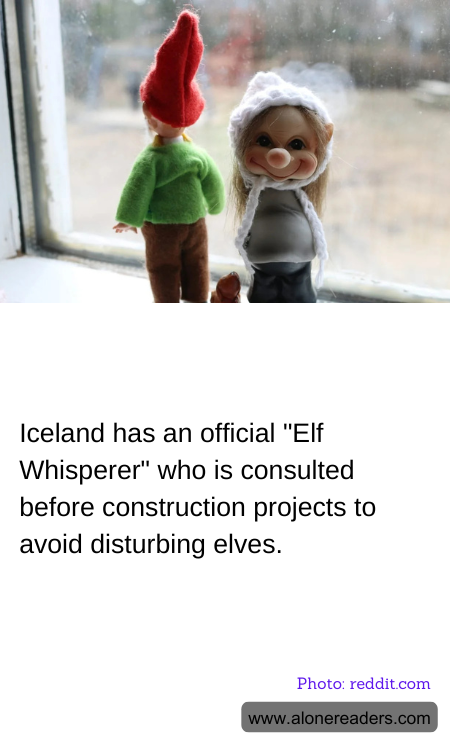
In the enchanting landscapes of Iceland, where volcanic mountains meet dramatic coastlines, folklore and modernity blend uniquely, particularly through the country's intriguing relationship with elves. Known locally as "Huldufólk" or hidden people, elves are a significant part of Icelandic folklore, believed to live in rocks and hills. Their presence is so fervently felt that it has influenced infrastructure and construction protocols to a considerable extent.
Icelandic respect for these mystical creatures is exemplified through the role of an "Elf Whisperer," a cultural liaison between the mystical and human realms. This individual, often someone deeply versed in local folklore and possessing a sensitivity to the land and its non-human inhabitants, is consulted before the commencement of construction projects. Their job is to ensure that the proposed development does not disturb the elves’ abodes.
This practice involves more than mere superstition; for many Icelanders, it is a reflection of a broader philosophy that emphasizes harmony with nature and all its inhabitants, visible or not. The consultation process usually consists of assessing the area for potential elfin habitat and, if necessary, finding solutions that would prevent the disruption of these beings. Sometimes, this could mean altering construction plans or relocating certain rocks and hills believed to be significant to the elves.
Such measures have occasionally led to headlines that capture global curiosity, reflecting an intriguing fusion of environmentalism and cultural preservation. For instance, routes of proposed highways have been altered, and specific rocks have been carefully moved to cater to the elves' supposed dwellings. To outsiders, this might seem like an unusual practice, yet for Icelanders, it is part of respecting and preserving the mystical charm of their natural landscape.
The existence of an "Elf Whisperer" and the significant consideration given to these hidden folk not only underscores the unique Icelandic way of reconciling development with conservation but also highlights the deep cultural roots and respect for traditions that define Iceland. This elf-conscious approach fosters a unique cultural identity, one intertwined with the supernatural and emphasizes coexistence with all elements of their environment, seen and unseen.
